

If you are reading this because you are trying to decide, the first thing worth saying is that the question itself is a form of care. People who do not love an animal do not agonise over this.
There is no formula that produces certainty. What exists are frameworks that make the decision clearer, and knowing what the process involves so it holds no unnecessary fear.
This is orientation for a conversation with your vet, who knows your cat and its condition and is the right person to guide the medical judgement.
Cats hide decline, which makes this harder
Cats conceal pain and illness instinctively, and they do it well enough that owners frequently feel ambushed by how fast the end seems to arrive.
It rarely arrives fast. What happens is that the cat compensated successfully until it could not, and the visible change is late in a long process.
That is why structured assessment matters more than impression. Impressions adjust gradually to a declining normal.
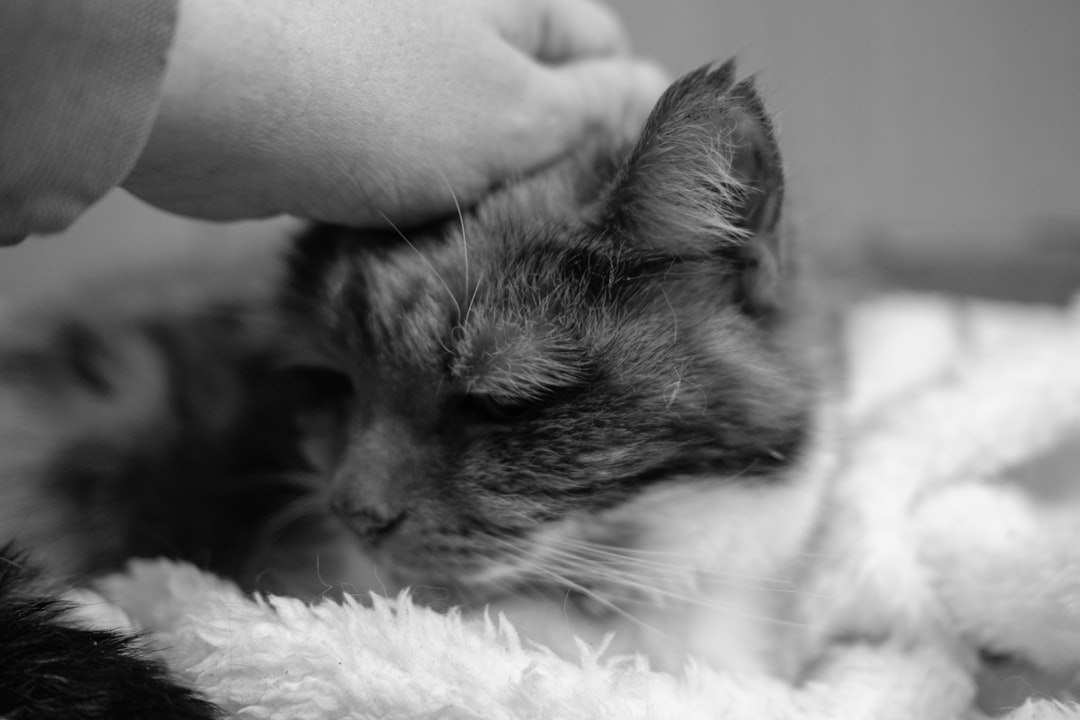
A practical quality-of-life framework
Vets commonly use scales built around a handful of domains. Assessing each honestly, rather than as a whole, is what makes this useful.
| Domain | Ask yourself | Concerning when |
|---|---|---|
| Pain | Is pain controlled with what we are giving? | Breakthrough pain, hiding, hunched posture |
| Appetite | Is the cat eating enough to sustain itself? | Persistent refusal despite appetite support |
| Hydration | Drinking, or needing fluids to stay hydrated? | Dehydration despite intervention |
| Hygiene | Can it stay clean and groom? | Soiling itself, matted, unable to reach |
| Mobility | Can it reach food, water and litter? | Unable to move without difficulty |
| Engagement | Does it still seek contact or interest? | Complete withdrawal, no responses |
| Good days vs bad | Which outnumbers which? | Bad days consistently outnumber good |
The last row is the one most owners find clarifying. It reframes an impossible question into an answerable one.
Keep a simple daily record
Memory is unreliable here, and it tends to be generous toward hope. A written record is not.
- Score the day out of ten each evening, or simply mark it good, fair or bad.
- Note whether the cat ate, drank, groomed and moved comfortably.
- Note any pain signs and whether medication helped.
- Do it for two weeks before making a decision if the situation allows.
- Look at the pattern rather than the individual days.

People who do this frequently find the record says something clearer than they expected in either direction — sometimes that there is more good time available than they feared.
Questions to ask your vet
Vets are often waiting to be asked rather than volunteering. Ask directly.
- What is the realistic prognosis, in weeks or months rather than vaguely?
- Is the pain genuinely controlled, or are we managing around it?
- What will deterioration look like, specifically?
- Is there a crisis that could happen suddenly, and what would it look like?
- If this were your cat, what would you be considering?
- What does doing nothing more look like from here?
That fifth question is fair to ask and most vets will answer it honestly. They have seen this many times and you have not.
The American Veterinary Medical Association publishes owner guidance on making this decision.
Palliative care is a real option
The choice is not only between aggressive treatment and euthanasia. Comfort-focused care is a legitimate middle path.
That means pain control, appetite support, easy access to everything, warmth, and stopping investigations that will not change what you do.

Ask specifically about hospice or palliative options. Some practices offer structured support, and some vets will visit at home.
Our guides to arthritis in cats and kidney disease in cats cover comfort measures for the two commonest end-of-life conditions.
What euthanasia actually involves
Knowing this removes a great deal of unnecessary fear, and people frequently say afterwards that they wish they had known.
Typically a sedative is given first, so the cat becomes drowsy and relaxed over several minutes. It is not distressed and is usually asleep before anything else happens.
The final injection is an overdose of anaesthetic, given into a vein. It works within seconds and the cat does not experience it.
- You can stay, or not. Both are legitimate and vets do not judge either.
- You can ask for sedation first — request it if it is not offered.
- Home visits are available from many practices, which suits anxious cats.
- Eyes usually remain open, and there may be a final breath or muscle twitch afterwards. Both are normal and not distress.
- You can have time with the cat before and after.

Practical arrangements
Deciding these in advance means not making them in the moment.
| Decision | Options |
|---|---|
| Where | Practice, or home visit |
| Who is present | You, family, children — your choice |
| Aftercare | Individual cremation, communal, or home burial where lawful |
| Keepsakes | Paw print, fur clipping — ask beforehand |
| Payment | Settle in advance so you are not at a desk afterwards |
| Other pets | Some benefit from seeing the body; evidence is mixed |
Settling payment in advance is a small thing that people are consistently grateful for.
The guilt, and what to do with it
Almost everyone second-guesses the timing. Too soon, too late, one more week, one week less.
The honest position is that there is rarely a single correct day. There is usually a window, and acting anywhere within it while the cat is still comfortable is a good decision.
The regret people report most is waiting too long, not acting too soon — often because they were waiting for certainty that was never going to arrive.
If you made the decision thoughtfully, with veterinary input, prioritising the cat over your own reluctance, you did it properly. That is what a good ending looks like.
Afterwards
Grief for an animal is real grief and does not need justifying to anyone.
There is no correct timeline, no correct amount, and no obligation to be over it by any particular point. Some people foster again within weeks; some never do.
Our guide to what to do with a pet’s belongings afterwards covers the practical decisions when you are ready, and there is no hurry to be.
If there are other animals in the household, keep routines stable. Some search or call for a while; most settle within weeks.

Other animals in the household
Surviving pets frequently react to a loss, and owners are often unprepared for it because nobody mentions it in advance.
Keep routines stable, feed at the usual times, and give extra contact without making a great deal of it. Most cats settle within a few weeks.
If a surviving cat now lives alone and struggles with it, our guides to separation anxiety in cats and adopting a bonded pair cover the options, and our guide to enrichment and play covers filling the gap.
Frequently Asked Questions
How do I know when it is time to euthanise my cat?
Assess pain control, appetite, hydration, hygiene, mobility and engagement separately rather than as an overall impression, and ask whether bad days consistently outnumber good ones. Keep a daily record for two weeks if you can.
Does euthanasia hurt the cat?
No. A sedative is usually given first so the cat becomes drowsy and relaxed over several minutes, and is typically asleep before the final injection, which works within seconds.
Should I stay with my cat during euthanasia?
Either choice is legitimate and vets do not judge it. Many people find staying helps them afterwards, but being unable to is common and does not mean you failed the cat.
Is palliative care an alternative to euthanasia?
Yes, for a period. Comfort-focused care means pain control, appetite support, easy access to resources and stopping investigations that will not change treatment. Ask your vet about hospice options.
Is it better to act too early or too late?
There is rarely one correct day — usually a window. The regret owners report most often is waiting too long, generally because they were waiting for a certainty that never arrived.
Can euthanasia be done at home?
Many practices offer home visits, which suits cats that find travel or the clinic distressing. Ask your own vet, and arrange sedation and payment in advance so nothing is decided in the moment.