
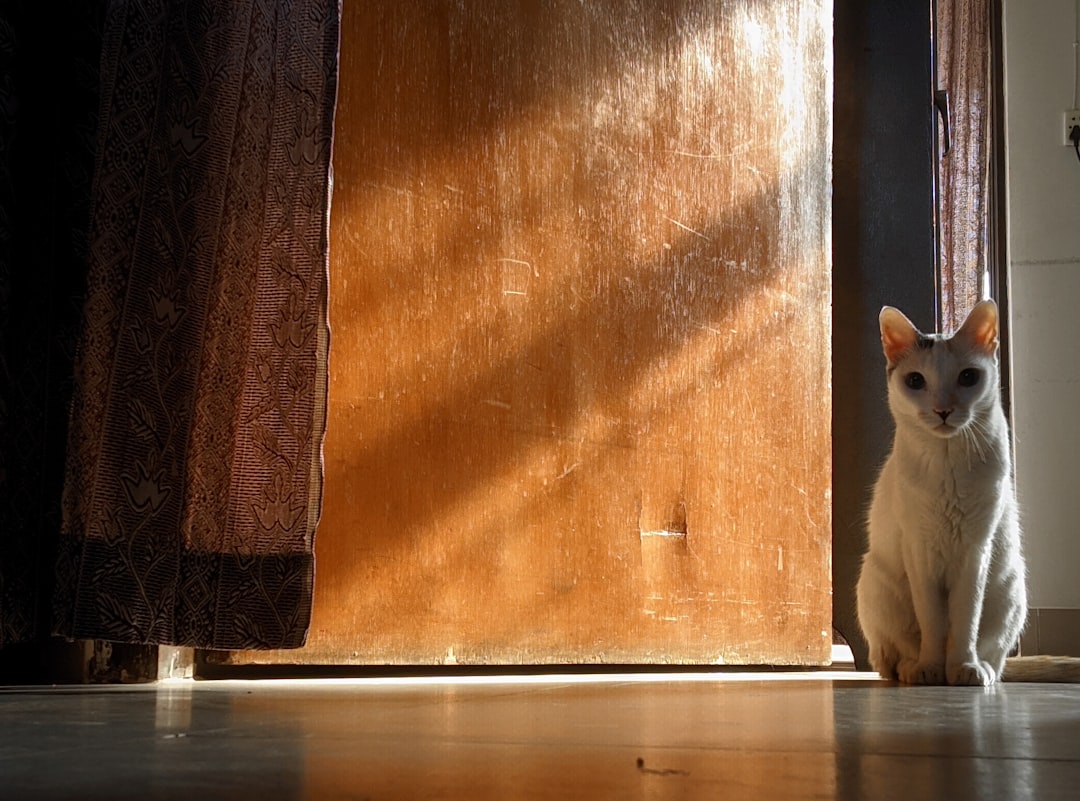
The idea that cats are indifferent to their owners is persistent and wrong, and it means genuine distress gets read as bad behaviour.
Separation-related anxiety is recognised in cats. It is less common than in dogs and it looks different, which is why it is missed.
Why it gets misread
A distressed dog barks, paces and destroys things in front of you when you return. A distressed cat does something quieter and more easily misinterpreted.
The commonest presentation is urinating on the owner’s bed or clothing. That gets read as spite, and it is almost the opposite — the cat is seeking out the strongest source of your scent.
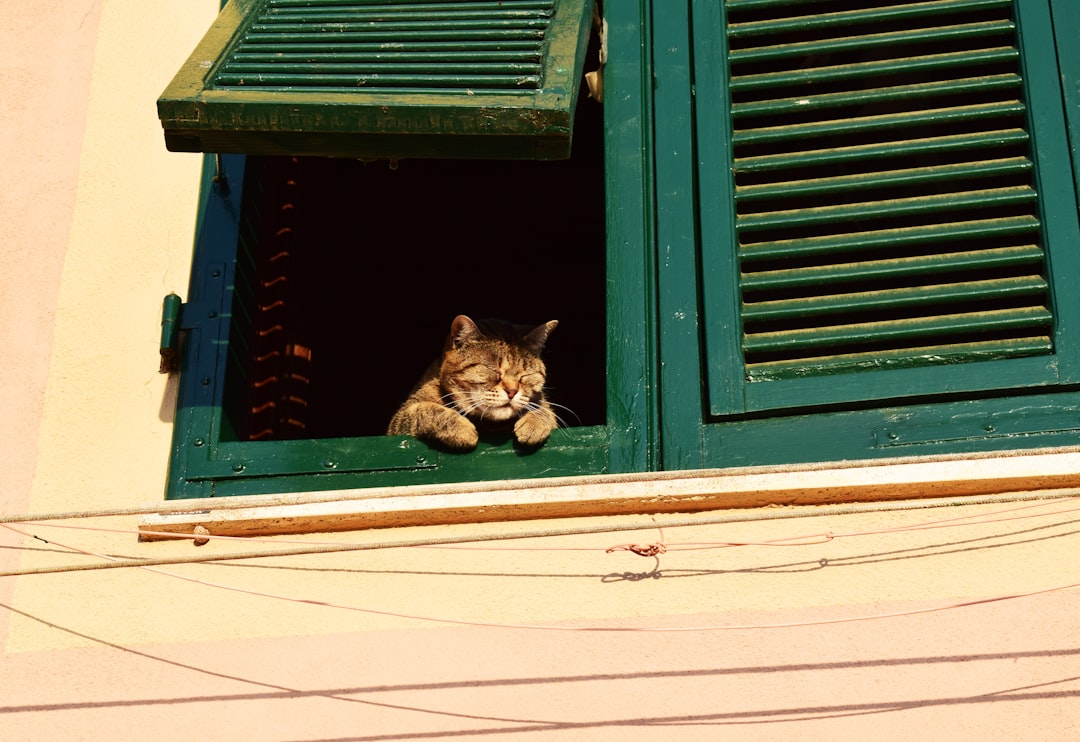
Cats do not act out of spite. They do not have the capacity for it, and punishing a cat for anxiety-driven behaviour reliably makes it worse.
The signs
| Sign | Often misread as | What it usually means |
|---|---|---|
| Urinating on your bed or clothes | Spite | Seeking your scent, anxiety |
| Excessive vocalising after you leave | Attention-seeking | Distress at departure |
| Over-grooming, bald patches | Skin problem alone | Possible anxiety component |
| Not eating while you are away | Fussiness | Stress-related appetite loss |
| Vomiting or diarrhoea when alone | Digestive upset | Stress response |
| Frantic greeting, clinginess | Affection | Relief after distress |
| Destructive behaviour near exits | Boredom | Attempting to follow you |
The location matters. Behaviour concentrated around doors, your bed, or items that smell of you points toward separation rather than general boredom.
Rule out medical causes first
This is not optional, particularly for the urination sign.
Urinary tract disease, kidney disease, diabetes, hyperthyroidism and arthritis all cause house-soiling, and treating a medical problem as anxiety wastes months.
Our guides to cat urinary problems and spraying versus urinating cover distinguishing the causes, and itchy cats and over-grooming covers the skin side.
Which cats are more affected
- Hand-raised or orphaned kittens, separated from littermates early.
- Single cats in households where everyone works away.
- Cats rehomed multiple times.
- Cats who previously had a constant companion — human or feline — and lost it.
- Indoor-only cats with little else to occupy them.
- Cats after a major routine change, such as a return to office work.
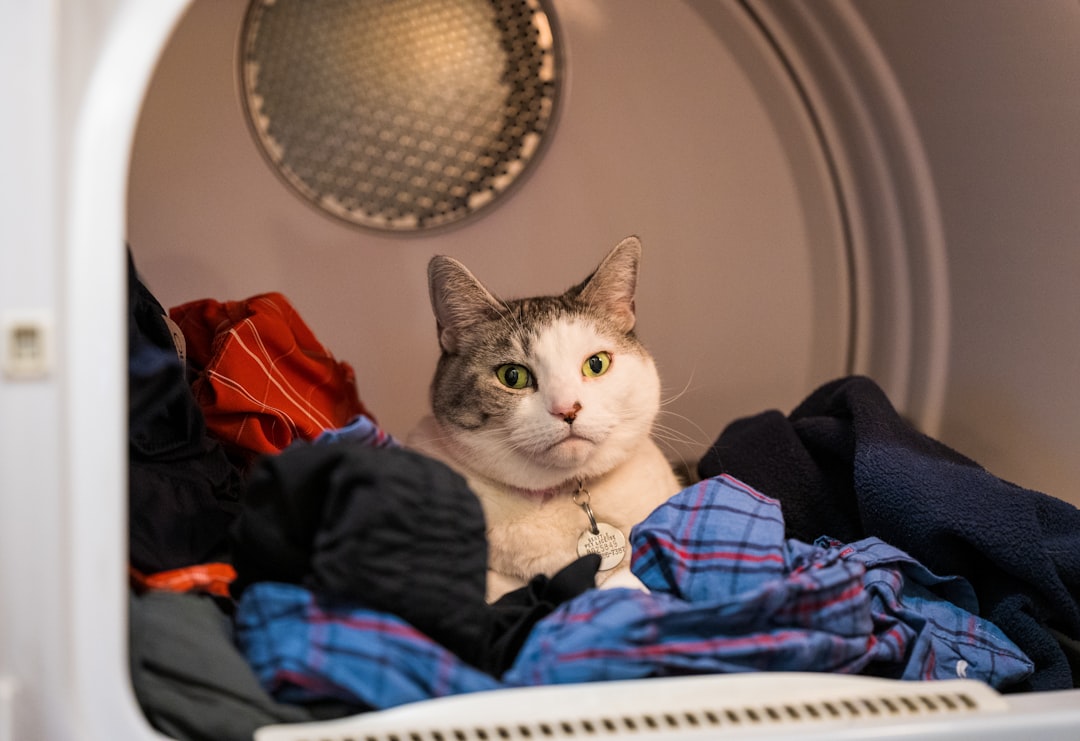
That last one produced a visible wave of cases as remote-working patterns changed, and it is worth naming: a cat that had company all day for two years and now does not has had a genuine change in circumstances.
What actually helps
The approach is environmental and routine-based rather than corrective, and most of it is unglamorous.
- Make departures boring. No prolonged goodbyes, no emotional farewells. Leave quietly.
- Make returns boring too. Greet after a few minutes, not at the door, so arrival stops being a peak event.
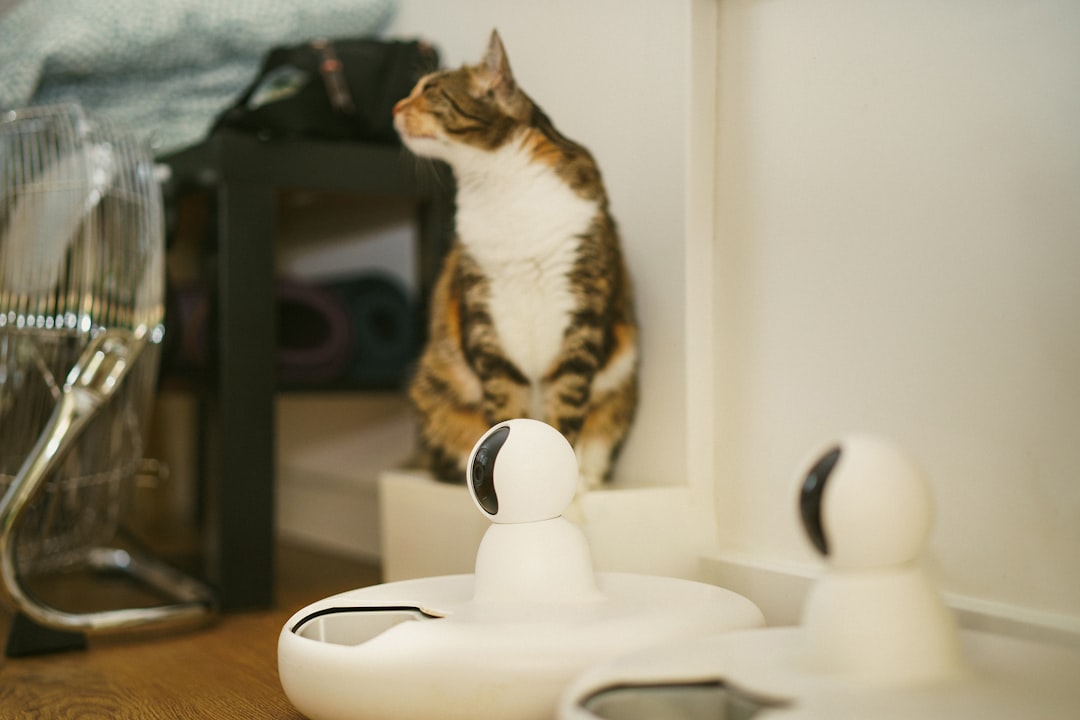
- Feed on a routine that is not tied to your movements — a timed feeder helps considerably.
- Provide foraging opportunities so there is something to do while you are out.
- Play properly before you leave, ending with food, so the cat settles into a nap.
- Leave scent — a worn t-shirt in a bed gives the cat what it is otherwise seeking on yours.
That last one directly addresses the urination problem in a lot of cases. Providing an acceptable scent-object reduces the drive to find one.
Enrichment for long absences
A cat alone for nine hours in an empty flat has nothing to do. That is a solvable problem.
Vertical space, a secure window perch, puzzle feeders, rotating toys and a scattered dry portion to hunt for all help. The Ohio State Indoor Pet Initiative publishes evidence-based guidance on this.
Our guide to playing with your cat properly covers the pre-departure session, which is the highest-value single change.
Would a second cat help?
Sometimes, and it is not a guaranteed fix. A companion helps a cat that is lonely; it does nothing for a cat specifically bonded to you, and a bad pairing adds stress.
| Situation | Second cat likely to |
|---|---|
| Young, sociable, bored alone | Help considerably |
| Distress focused on you specifically | Not resolve it |
| Previously lived with another cat | Often help |
| Older, set in its ways, dislikes cats | Make things worse |
| Already anxious and territorial | Increase stress |
| Adopting a bonded pair from the start | Usually best of all |
Our guides to adopting a bonded pair and introducing a new cat to resident pets cover doing it properly if you go that way.
What not to do
- Do not punish soiling — it increases anxiety and worsens the behaviour.
- Do not shut the cat out of rooms it soils; that removes access without addressing cause.
- Do not make departures and returns emotional events.
- Do not use ammonia-based cleaners, which smell like urine and invite repetition.
- Do not assume it will resolve on its own if it has persisted for months.
Clean soiled areas with an enzymatic cleaner properly. Residual scent is an invitation, and the cat is already drawn to that spot.
When to involve a vet
Beyond the initial medical work-up, involve your vet again if the behaviour persists after several weeks of environmental change.
Pheromone products help some cats. Anti-anxiety medication exists and is appropriate in a minority of cases, always alongside behavioural work rather than instead of it.

A referral to a veterinary behaviourist is worth asking about for entrenched cases. This is a treatable problem, and it is not a reason to give up on a cat.
If circumstances mean long absences are unavoidable, our guide to leaving your cat when you travel covers the options.
Longer absences
Anxiety around a working day is different from anxiety around a week away, and the solutions differ.
For holidays, a live-in sitter or frequent visits from someone the cat already knows is considerably better than a cattery for an anxious cat, because the territory stays constant.
Our guide to leaving your cat when you travel compares the options, and anxious cats are the clearest case for home-based care.
Frequently Asked Questions
Do cats really get separation anxiety?
Yes. It is recognised in cats, less common than in dogs and presents differently — usually quieter signs such as urinating on the owner’s bed, over-grooming or vocalising after departure.
Why does my cat pee on my bed when I go away?
Almost never spite. The bed carries the strongest concentration of your scent, and an anxious cat seeks it out. Punishing this reliably makes it worse; providing a worn t-shirt in a bed often helps.
What should I rule out before assuming anxiety?
Medical causes, especially for urination. Urinary tract disease, kidney disease, diabetes, hyperthyroidism and arthritis all cause house-soiling and are commonly mistaken for behavioural problems.
Which cats are most prone to separation anxiety?
Hand-raised kittens separated from littermates early, single cats in households that are out all day, cats rehomed repeatedly, and cats whose routine recently changed — such as an owner returning to office work.
Will getting a second cat fix separation anxiety?
Sometimes. It helps a cat that is lonely but does little for one specifically bonded to you, and a poor pairing adds stress. Adopting a bonded pair from the start is usually the best version.
How should I leave and come home?
Undramatically. No prolonged goodbyes, and greet a few minutes after arriving rather than at the door, so departures and returns stop being emotional peaks the cat anticipates and dreads.