
Cats develop age-related cognitive decline much as people and dogs do, and it is substantially under-recognised — partly because the signs are attributed to old age generally, and partly because several treatable conditions look identical.
It becomes more common with age and is genuinely frequent in cats past about fifteen.
This is orientation for a conversation with your vet, and that conversation should happen before concluding anything.
Rule out the treatable things first
This is the most important section, because several conditions produce exactly this picture and most are manageable.
| Condition | Overlapping signs |
|---|---|
| Hyperthyroidism | Restlessness, vocalising, altered behaviour |
| High blood pressure | Disorientation, vocalising, sudden blindness |
| Kidney disease | Lethargy, altered routine, nausea |
| Arthritis | Reduced activity, irritability, litter box accidents |
| Deafness | Loud vocalising, apparent unresponsiveness |
| Failing eyesight | Bumping into things, night disorientation |
| Brain tumour or other neurological disease | Behaviour change, seizures |
Cognitive dysfunction is a diagnosis of exclusion. It is reached after ruling these out, not assumed because a cat is old.
Our guides to hyperthyroidism, arthritis in cats and eye problems and sudden blindness cover three of the commonest.
The signs
Vets often group these into recognisable categories, which makes them easier to describe accurately.
- Disorientation — staring at walls, getting stuck in corners, appearing lost in familiar rooms.
- Altered interaction — either unusually clingy or newly withdrawn.
- Sleep-wake changes — awake and vocal at night, sleeping heavily by day.
- House-soiling — forgetting the tray or where it is.
- Activity changes — aimless pacing or wandering, or greatly reduced activity.
- Anxiety — increased startling, distress when alone.
- Reduced grooming — a deteriorating coat.
Night-time vocalising is the sign that most often brings owners to a vet, and it is frequently the first noticed.
Our guide to why cats meow at night covers distinguishing this from ordinary energy or hunger-driven calling.
What it is not
Two misreadings cause unnecessary distress.
It is not the cat being difficult, spiteful or deliberately ignoring you. Cognitive change is neurological and not under the cat’s control.
And it is not automatically the end. Many cats live comfortably for a long time with mild to moderate cognitive change, particularly in a stable environment.

Adapting the home
Environmental change is the intervention with the most immediate effect, and it costs almost nothing.
- Night lights along routes to the tray, water and bed.
- Keep furniture and resources in fixed positions — the cat is navigating from memory.
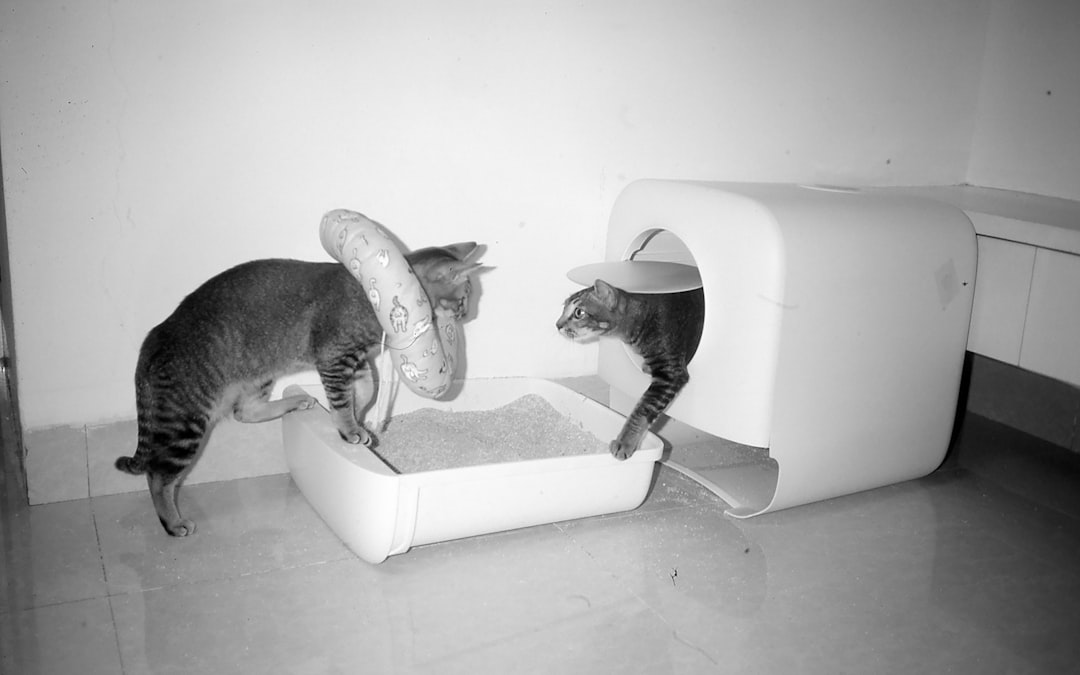
- More litter trays, closer together, with low entry sides.
- Food and water on every floor the cat uses.
- Steps or ramps to favourite spots.
- A completely consistent daily routine — predictability reduces anxiety.
- Reduce household change where you can.
Consistency does the heaviest lifting. A cat relying on memory is destabilised by rearranged furniture in a way a younger cat is not.
Our guide to caring for a senior cat day to day covers the wider adaptations.
Medical and dietary options
There is no cure, but there are things worth discussing.
Diets formulated for senior cognitive support exist, as do supplements with varying evidence. Some cats are prescribed medication to reduce anxiety or support cognition.
Ask your vet what the evidence actually supports rather than buying supplements independently — the market is larger than the evidence base.
International Cat Care publishes owner guidance on senior cat health and behaviour.
Responding to night-time distress
This is where owners most need permission to do the thing that helps.
A cognitively impaired cat calling in the dark is disoriented, not manipulating you. Going to it, turning on a light and settling it is appropriate — the reinforcement concern that applies to a healthy young cat does not apply here.
Do not shut a distressed senior cat out of the room, and do not punish night vocalising. Neither works and both increase anxiety.
Keeping mental engagement
Gentle stimulation appears to help, and it improves quality of life regardless.
- Short, low-intensity play sessions adapted to what the cat can manage.
- Food puzzles that are easy rather than challenging.
- Regular gentle handling and grooming, which also checks for other problems.
- Predictable interaction at the same times daily.
Keep it easy. A puzzle a confused cat cannot solve produces frustration rather than engagement. Our guide to playing with your cat covers adapting sessions for older cats.
Tracking it
Cognitive change is gradual, and owners adjust to a declining normal without noticing.
Keep a brief monthly note: sleep pattern, vocalising, tray accidents, disorientation, interaction. Over six months that record shows a trajectory memory does not.
It is also what allows a genuine quality-of-life conversation later. Our guide to end-of-life decisions for cats covers assessing that honestly when the time comes.
Our guide to how often a cat should see the vet covers the twice-yearly senior checks where this is best raised.
What to expect over time
Cognitive dysfunction is progressive, and knowing the general shape of it helps you plan rather than react.
Progression is usually slow — measured in years rather than months — and most cats have long stretches where nothing much changes, punctuated by noticeable steps down.
- Early: mild disorientation, altered sleep, slightly reduced interaction.
- Middle: night vocalising, litter tray accidents, forgetting learned routines.
- Later: significant disorientation, reduced grooming, marked withdrawal or clinginess.
Other conditions almost always run alongside — arthritis, kidney disease, hyperthyroidism, hearing and sight loss. Managing those well often produces more visible improvement than anything aimed at cognition itself.
Quality of life is judged on eating, comfort, rest and moments of contentment, not on how much the cat remembers. Our guide to day-to-day senior cat care covers the tracking that makes those judgements less agonising.
Frequently Asked Questions
Do cats get dementia?
Yes. Feline cognitive dysfunction is age-related cognitive decline, and it is genuinely common in cats past about fifteen. It is substantially under-recognised because signs are attributed to old age generally.
What should be ruled out before diagnosing cognitive decline?
Hyperthyroidism, high blood pressure, kidney disease, arthritis, deafness, failing eyesight and neurological disease all produce overlapping signs. Cognitive dysfunction is a diagnosis of exclusion.
What are the signs of dementia in cats?
Disorientation such as staring at walls or getting stuck in corners, altered interaction, night-time vocalising with daytime sleeping, house-soiling, aimless pacing, anxiety and reduced grooming.
Should I go to my cat when it yowls at night?
For a cognitively impaired cat, yes. It is disoriented rather than seeking attention, so the reinforcement concern that applies to a healthy young cat does not apply. Never shut it out or punish it.
What home changes help a cat with cognitive decline?
Night lights along routes, keeping furniture and resources in fixed positions, more low-entry litter trays, food and water on every floor, steps to favourite spots, and a rigidly consistent routine.
Is there treatment for feline cognitive dysfunction?
No cure, but senior cognitive support diets, some supplements and occasionally medication are worth discussing. Ask your vet what the evidence supports — the supplement market is larger than the evidence base.