
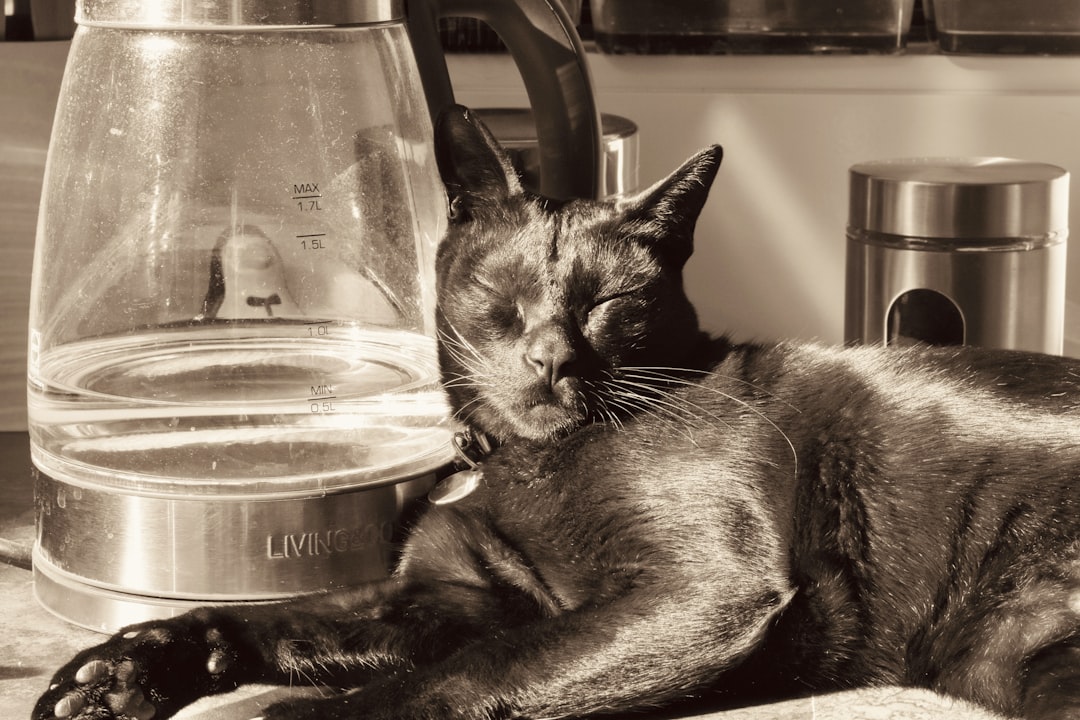
Counter surfing is one of the most complained-about cat behaviours and one of the most misunderstood, because people treat it as disobedience.
It is not. It is a cat doing three entirely normal things — seeking height, investigating food smells, and occasionally getting a reaction out of you.
Address those three and the behaviour largely resolves. Punish it and you get a cat that jumps up when you leave the room.
Why cats get on counters
| Motivation | What the cat gets | What actually helps |
|---|---|---|
| Height and vantage | A view, and a sense of safety | A better perch nearby |
| Food and smells | Crumbs, scraps, interesting scents | Clear surfaces, no food left out |
| Attention | You react, every time | No reaction at all |
| Running water | A tap, which many cats prefer | A fountain elsewhere |
| Warmth | Sunny worktop, warm appliance | A warm bed somewhere better |
| Boredom | Something to do | Play and enrichment |
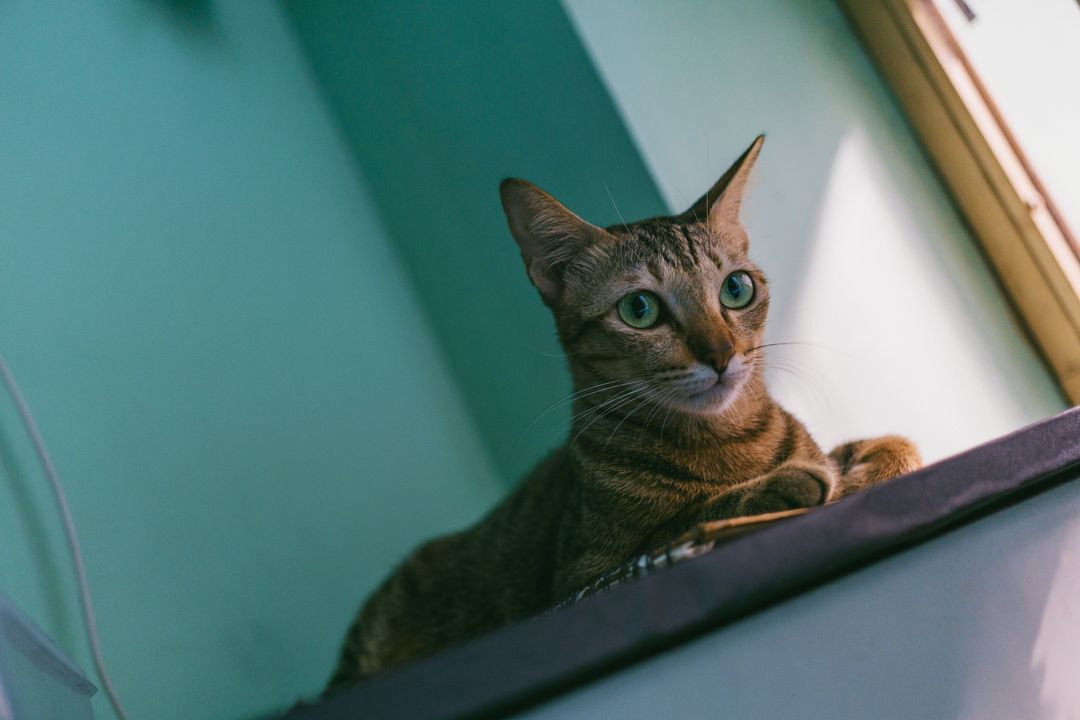
Height is the big one. Cats are safest and most comfortable above ground level, and in most kitchens the counter is the only elevated surface available.
Why punishment fails here specifically
Counter surfing is a particularly clear demonstration of why aversive methods do not work on cats.
The behaviour is self-rewarding — the cat gets height, or a crumb — and that reward happens whether or not you are present. Your disapproval only teaches the cat to wait until you are not there.
Shouting also delivers attention, which for some cats is itself the payoff. A cat that jumps up whenever you are on the phone has learned something very specific.
The Humane Society of the United States publishes guidance on humane approaches to unwanted pet behaviour.
The approach that works
Three things together, none of which is sufficient alone.
- Remove the reward. No food, crumbs, dirty plates or interesting items left on counters, ever.
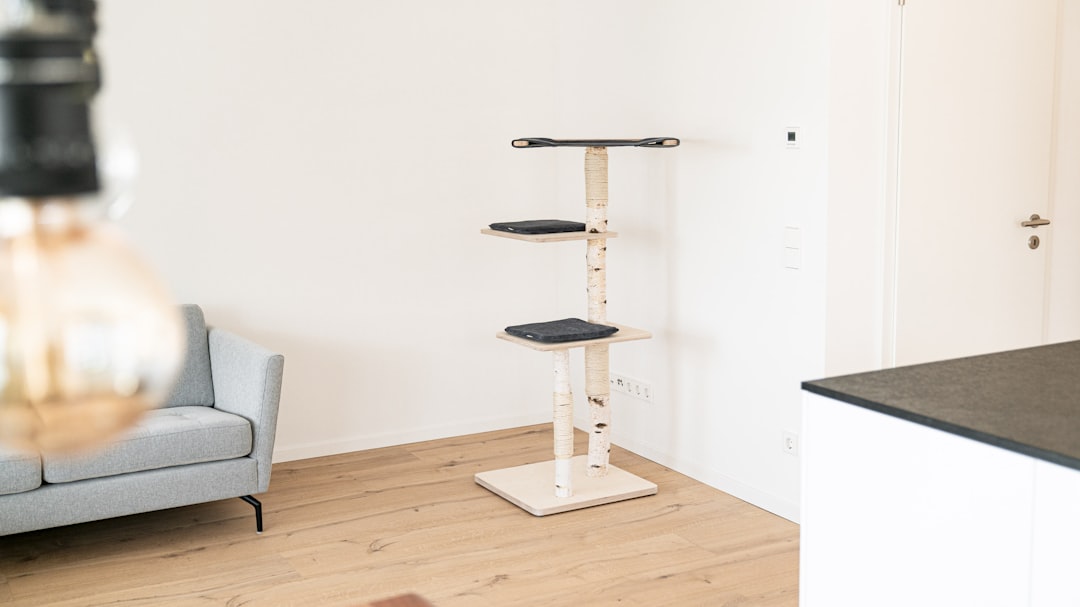
- Provide a better alternative. A tall perch, cat tree or cleared shelf near the kitchen — ideally higher than the counter.
- Reward the alternative heavily. Treats and attention when the cat uses its perch, especially early on.

Higher than the counter matters. If the cat’s perch is lower, the counter still offers the better vantage and wins.
Our guide to clicker training basics covers rewarding the alternative precisely, which speeds this up considerably.
Making the counter less attractive
Deterrents are the supporting measure, not the main one, and they must be environmental rather than delivered by you.
- Double-sided tape on the edge, which cats dislike underfoot.
- Aluminium foil across the surface temporarily.
- A shallow tray of water at a favoured landing spot.
- Removing the chair or stool that provides the route up.
- Closing the kitchen when unsupervised, if that is practical.
The reason these work where a spray bottle does not is that the cat encounters them whether or not you are present, so it learns about the counter rather than about you.
Remove deterrents gradually once the alternative perch is established, rather than all at once.
The tap problem
A significant number of counter-jumping cats are there for running water rather than food.
Cats frequently prefer moving water, and a tap is the most reliable source in the house. A water fountain elsewhere addresses this directly and often resolves the behaviour on its own.
It also increases total water intake, which matters for urinary and kidney health. Our guide to cat urinary problems covers why hydration is worth encouraging.
Hygiene, honestly
The usual concern is contamination from litter tray to food preparation surface.
It is a reasonable concern, though the risk is often overstated. Practical mitigation: wipe surfaces before food preparation, keep the tray as far from the kitchen as the house allows, and scoop daily.
For households where this genuinely matters — immunocompromised members, very young children — excluding the cat from the kitchen entirely is a legitimate choice rather than a failure of training.
Cats that are counter-surfing for food
If the motivation is specifically food, look at the feeding routine rather than only at the counter.
- Feed several smaller meals rather than one or two large ones.
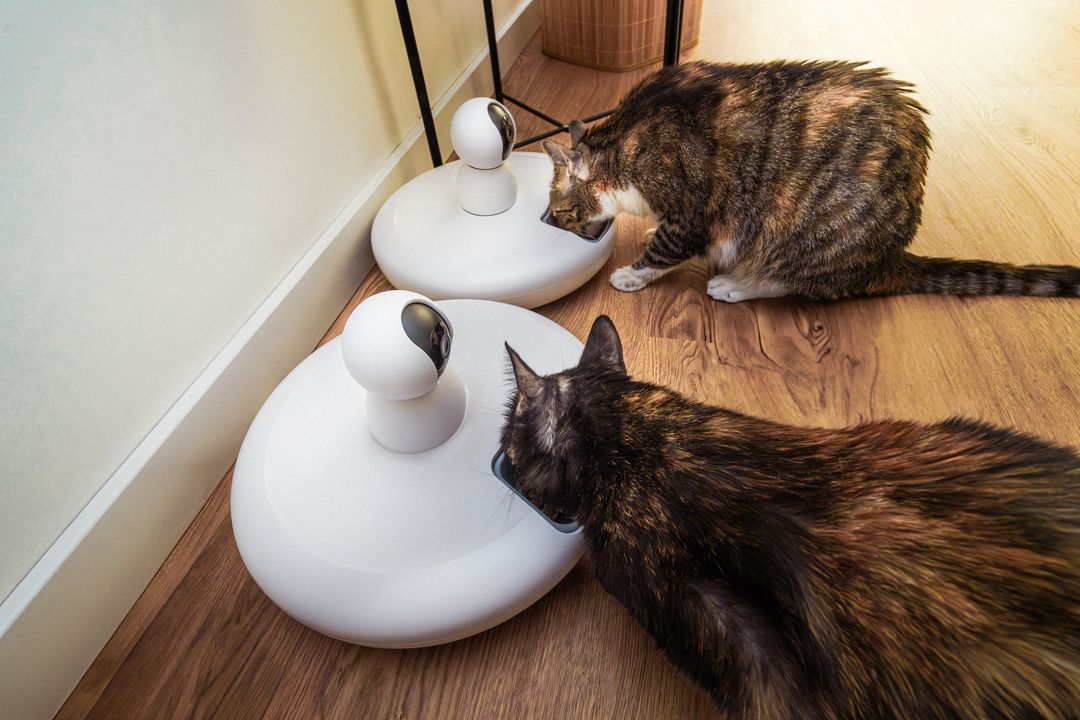
- Use puzzle feeders to extend how long eating takes.
- Check the daily ration is actually adequate for the cat’s weight.
- Feed at consistent times so the cat is not foraging opportunistically.
- Never feed from the counter or table, even once.
That last point is the one households undermine themselves on. A single scrap handed down from a worktop teaches a lasting lesson.
Our guide to body condition and portioning covers whether the ration is right.
When it is new behaviour
A cat that has never counter-surfed and suddenly starts is worth a moment’s thought.
Sudden food-seeking — scavenging, raiding bins, unusual hunger — can indicate hyperthyroidism, diabetes or parasites rather than a behavioural change.
Our guides to hyperthyroidism in cats and feline diabetes cover the two that most commonly present this way.
Realistic expectations
Some cats stop entirely. Many reduce it substantially. A few will always occasionally get up there when nobody is home.
Judge it on trajectory rather than perfection, and keep rewarding the alternative long after the behaviour improves — that is what stops it returning.
Our guide to enrichment and play covers the boredom component, which is frequently the last piece.
What not to do
Several widely shared methods either fail or make the situation worse, and they are worth naming.
- Spray bottles. The cat learns not to jump up while you are watching, and becomes wary of you.
- Shouting. Same result, plus it becomes background noise quickly.
- Punishing after the fact. Cats do not connect a telling-off with something they did earlier.
- Scat mats and startling deterrents. These can create genuine anxiety around the kitchen.
- Tin-foil and tape, indefinitely. Fine as a short-term interrupt, but not a plan.
Everything on that list suppresses the behaviour without addressing why the cat wants the height. The approaches that hold are the ones that give the cat somewhere better to be and remove the reward from the counter.
Our guide to helping a nervous cat around visitors covers why deterrent-based approaches tend to backfire in cats generally.
Frequently Asked Questions
Why does my cat jump on the kitchen counter?
Usually for height and vantage, food smells, running water from the tap, warmth, or the reaction it gets from you. In most kitchens the counter is the only elevated surface available.
Does spraying water stop counter surfing?
No. The behaviour is self-rewarding and happens whether you are present or not, so the cat simply learns to wait until you leave. Shouting also delivers attention, which some cats find rewarding.
What actually stops a cat getting on counters?
Three things together — remove the food reward entirely, provide a perch nearby that is higher than the counter, and reward the cat heavily for using it, especially in the early weeks.
Do deterrents like foil or tape work?
As a supporting measure, yes, because the cat encounters them whether or not you are present. They teach the cat about the counter rather than about you. Remove them gradually once the perch is established.
My cat only jumps up for the tap — what helps?
A water fountain elsewhere. Many cats prefer moving water and the tap is the most reliable source in the house. It often resolves the behaviour and increases total water intake, which is separately beneficial.
My cat suddenly started counter surfing — why?
Sudden food-seeking, scavenging or unusual hunger can indicate hyperthyroidism, diabetes or parasites rather than a behavioural change. New behaviour in an older cat is worth a veterinary check.