
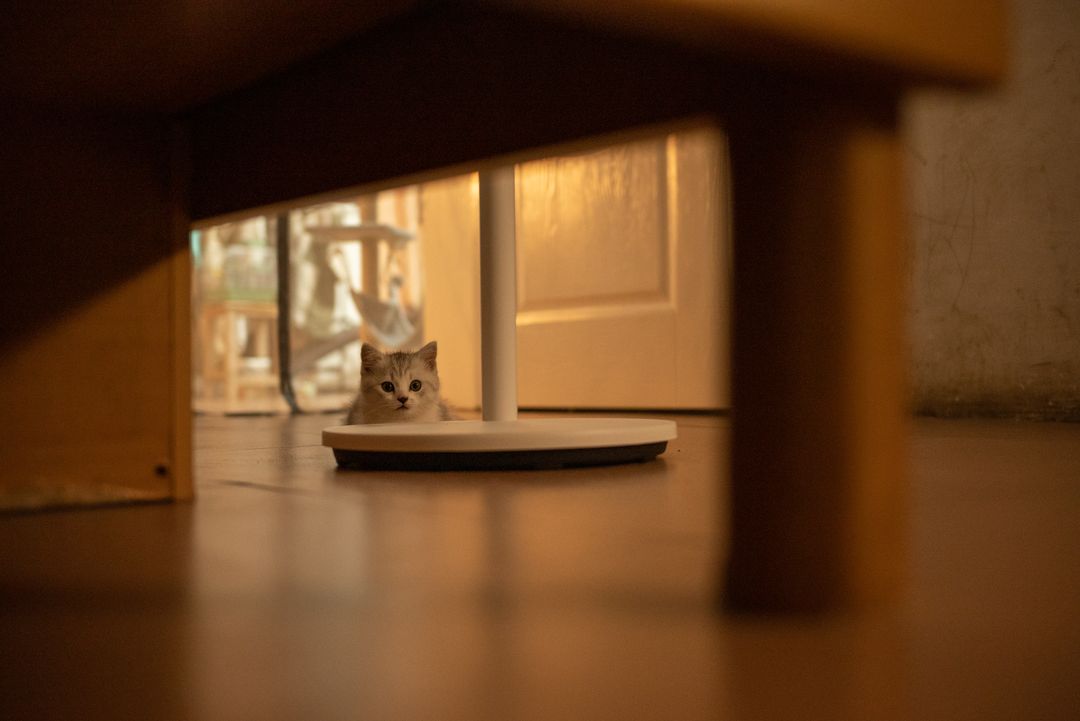
Some cats greet everyone at the door. Others disappear the moment the bell rings and are not seen again until the last guest has gone.
Owners often find this embarrassing or worrying. Usually it is neither — but it is worth understanding what drives it and where the line is between a shy cat and a distressed one.
First: does it matter?
A cat that hides when visitors arrive and comes out afterwards, relaxed and behaving normally, is coping. That is a functioning strategy, not a problem to fix.
It becomes worth addressing when it goes further.
- Hiding for hours after everyone has left.
- Not eating, drinking or using the tray during or after visits.
- Hiding from household members, not just strangers.
- Signs of chronic stress — over-grooming, cystitis, house-soiling.
- Aggression when cornered or approached in the hiding place.

Chronic stress has physical consequences in cats. Our guide to cat urinary problems covers the stress-linked condition that most often results.
Why cats find visitors difficult
From the cat’s perspective, several unwelcome things happen simultaneously.
| What happens | How the cat experiences it |
|---|---|
| Doorbell, then unfamiliar voices | Sudden unpredictable noise |
| New people in its territory | Intrusion it cannot control |
| Unfamiliar smells | Other animals, other places |
| Movement through the house | Routes and escape options changing |
| Direct attention and eye contact | Threatening in cat terms |
| Being sought out and picked up | Loss of control — the worst part |
That last row is the one that turns a manageable situation into a lasting fear. A cat retrieved from under a bed and handed to a stranger learns that hiding does not work, which usually produces deeper hiding rather than more sociability.
Which cats are more affected
Early socialisation matters more than almost anything else.
Kittens handled by a variety of people between roughly two and seven weeks generally grow into confident adults. Cats that missed that window — feral-born, orphaned, or raised in isolation — are frequently wary for life.
That is not a failure and it is largely not reversible. The realistic aim is a cat that feels safe, not a cat that greets strangers.
Our guide to socialising a feral kitten covers that window, and helping a shy shelter cat covers newly adopted adults.
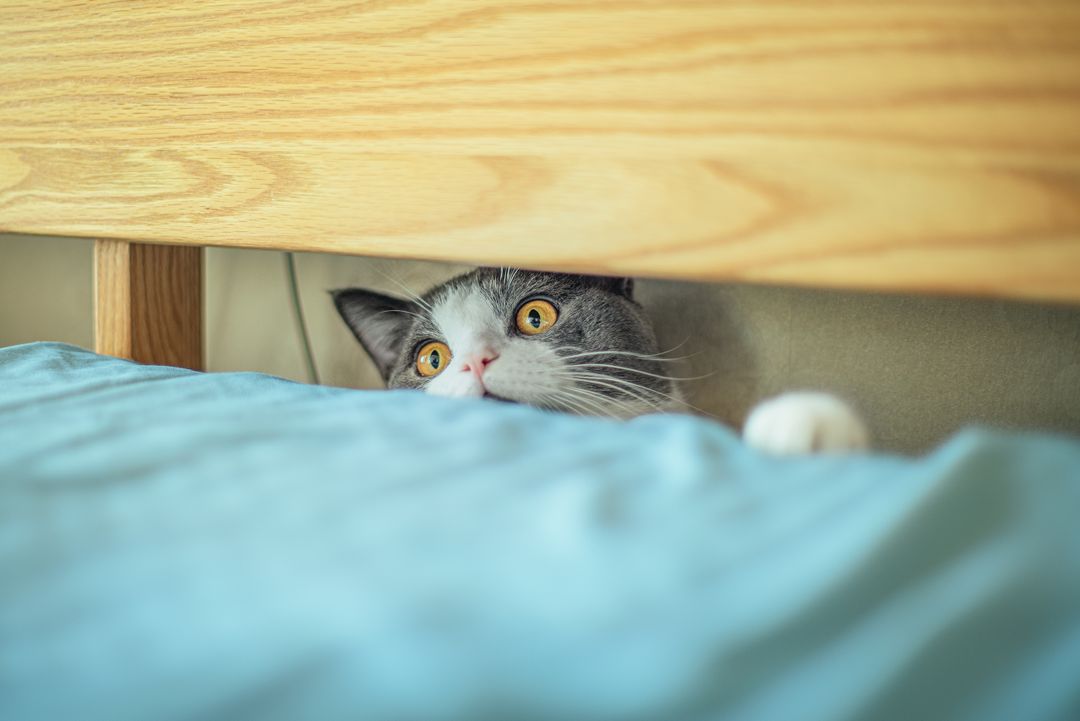
Provide hiding places, deliberately
The instinct is to block off under the bed so the cat cannot disappear. Do the opposite.
A cat with a reliable, accessible retreat is calmer overall than one with nowhere to go. Removing hiding places does not produce a sociable cat; it produces an anxious one with no strategy.
- Provide at least one covered hiding spot per cat, in a quiet room.
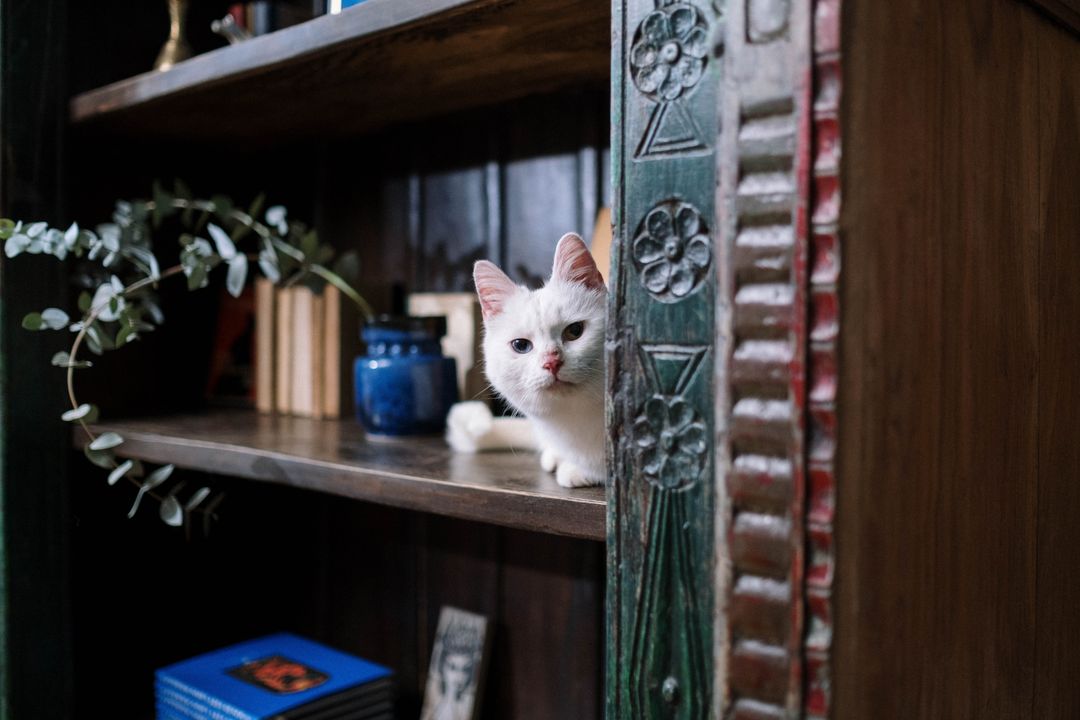
- Add height — a high shelf or cat tree lets a cat observe without feeling exposed.
- Keep food, water and a tray accessible in or near the safe room.
- Make the hiding place off limits to guests, especially children.
- Never retrieve a cat from its hiding place to show someone.
Height is underrated here. Many cats that will not stay at floor level with visitors will happily watch from a shelf.
What to ask visitors to do
Most people mean well and do exactly the wrong thing.
- Ignore the cat completely. No approaching, no calling, no reaching.
- Avoid direct eye contact — a slow blink is friendly, a stare is not.
- Stay seated and let the cat decide.
- Keep voices moderate, especially with children.
- Never pick the cat up, however friendly it seems.
Being ignored is what allows a cautious cat to investigate. Counterintuitively, the guest most likely to be approached is the one paying no attention at all.
Building confidence over time
Progress is slow and it is real. The method is repeated, unthreatening, low-intensity exposure.
- Start with one calm visitor rather than a group.
- Keep visits short at first.
- Have the visitor sit and ignore the cat entirely.
- Feed the cat something high value while the visitor is present, at a distance it tolerates.
- Let the visitor toss a treat away from themselves, not toward the cat.
- Over sessions, allow the cat to close the distance on its own terms.
Pairing visitors with food is the mechanism. The cat is learning that strangers predict good things and demand nothing.
A wand toy also works well, because it lets interaction happen at arm’s length. Our guide to playing with your cat covers using it, and clicker training covers reward-based confidence building.
Practical management for events
For parties, tradespeople or anything busy, management beats training.
Set the cat up in a quiet room in advance — before the noise starts, not after it has hidden — with food, water, a tray and a hiding place, and put a note on the door.

This is not giving up. It is removing an entirely avoidable stressor, and it prevents the escape-through-an-open-door risk that comes with people coming and going.
Our guide to microchipping and registration covers the identification that matters if a frightened cat does bolt.
When to get help
If the cat is hiding from household members, showing chronic stress signs, or becoming aggressive when approached, that goes beyond shyness.
Rule out pain first — cats in pain withdraw and become intolerant of handling, and it is frequently mistaken for temperament.

Our guide to arthritis in cats covers the commonest hidden pain in older cats, and why cats bite covers defensive aggression.
Beyond that, ask your vet about referral to a veterinary behaviourist. Some cats also benefit from anti-anxiety medication alongside behavioural work.
The American Association of Feline Practitioners publishes owner guidance on reducing feline stress at Cat Friendly Homes, which covers the same handling principles from a veterinary standpoint.
Frequently Asked Questions
Is it a problem if my cat hides from visitors?
Usually not. A cat that hides during a visit and comes out afterwards behaving normally is coping. It matters when hiding continues for hours, or the cat stops eating, drinking or using the tray.
Should I block off my cat’s hiding places?
No — do the opposite. A cat with a reliable retreat is calmer overall. Removing hiding places produces an anxious cat with no strategy rather than a sociable one.
What should I tell visitors to do?
Ignore the cat completely — no approaching, calling, reaching or eye contact, and never picking it up. Counterintuitively, the guest most likely to be approached is the one paying no attention.
Why is my cat so wary of strangers?
Usually early socialisation. Kittens handled by various people between roughly two and seven weeks become confident adults; cats that missed that window are frequently wary for life, which is not reversible.
How do I build my cat’s confidence with people?
Repeated low-intensity exposure — one calm visitor, short visits, the visitor seated and ignoring the cat, and high-value food given at a distance the cat tolerates. Let the cat close the gap itself.
What should I do when hosting a party?
Set the cat up in a quiet room before the noise starts, with food, water, a tray and a hiding place, and put a note on the door. It also prevents escape through doors opening repeatedly.