

An itchy cat is a genuinely miserable cat, and skin problems are among the most frustrating things to resolve because the visible signs look similar whatever the cause.
There is a logical order to working through it, and skipping the first step is why many cases drag on for months.
This is orientation for a veterinary conversation. Skin disease in cats is one of the areas where guessing wastes the most time.
Cats itch differently from dogs
An itchy dog scratches visibly. An itchy cat frequently grooms, and grooming looks like normal cat behaviour.
That is why feline skin disease is so often missed, or attributed to stress when it is allergic, or the reverse.
- Over-grooming — often symmetrical hair loss on the belly, inner legs or flanks.
- Miliary dermatitis — small crusty bumps, most noticeably along the back.
- Head and neck excoriation — scratching that breaks the skin around the face and ears.
- Eosinophilic lesions — raised plaques or an ulcer on the lip.
- Scabbing and thinning coat, particularly at the tail base.
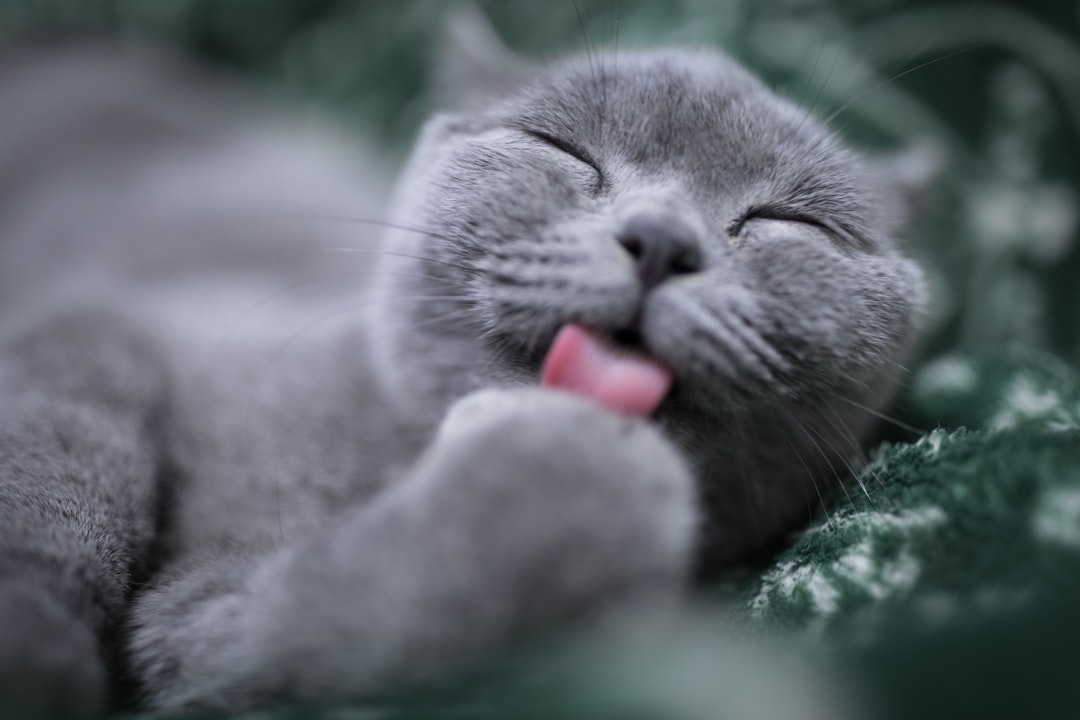
Owners frequently report the hair loss without ever having seen the cat over-groom, because cats do it privately.
Always rule out fleas first
This is the step people skip, and it is the single commonest cause.
Flea allergy dermatitis means a cat reacts severely to a small number of bites. You may never see a flea, because the cat grooms them off — the reaction is out of proportion to the burden.
Treating for fleas properly, including the household, for at least three months is standard before investigating further. Anything else is investigating around an untreated cause.
Our guide to fleas and ticks in cats covers doing it thoroughly, including the environmental treatment most people miss.
The main causes
| Cause | Typical pattern | How it is confirmed |
|---|---|---|
| Flea allergy | Tail base, back, miliary crusts | Rigorous flea control trial |
| Environmental allergy | Face, neck, belly; sometimes seasonal | Exclusion of other causes |
| Food allergy | Head and neck, non-seasonal | Strict elimination diet |
| Mites | Ears, head, intense itch | Skin scrapings, ear swab |
| Ringworm | Circular hair loss, scaling | Culture or PCR |
| Stress over-grooming | Symmetrical belly, no skin lesions | Diagnosis of exclusion |
| Bacterial or yeast infection | Usually secondary | Cytology |
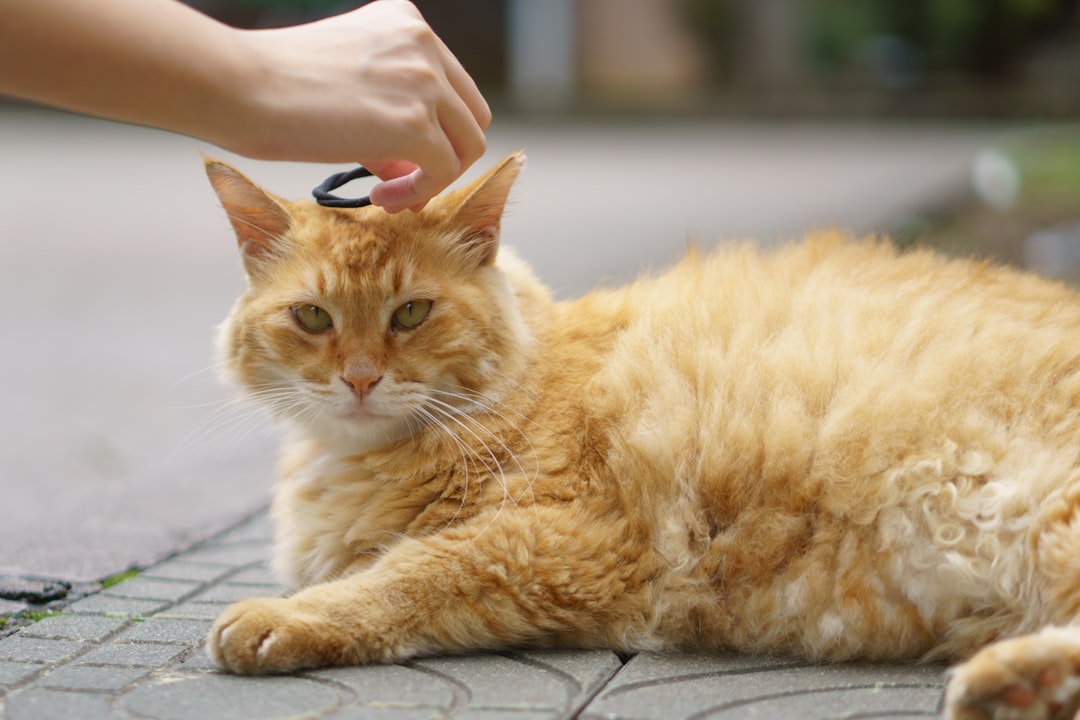
The Cornell Feline Health Center publishes detailed material on feline skin conditions.
Our guide to ringworm in cats covers the one that is zoonotic, and ear mites covers the parasitic cause most often confined to the head.
Food allergy and the elimination diet
Food allergy in cats is real but less common than the pet food market implies, and it is usually to a protein rather than to grain.
There is no reliable blood test. Diagnosis requires a strict elimination diet — a novel or hydrolysed protein and nothing else at all — for eight to twelve weeks.
- No treats, no table scraps, no flavoured medication.
- No hunting, which means indoors for the duration.
- Separate feeding in multi-cat households.
- One diet, not several — switching mid-trial invalidates it.
- Reintroduce the original food afterwards to confirm the reaction returns.
That last step is the one people skip and it is what makes the trial conclusive. Improvement alone could be seasonal or coincidental.

Our comparison of wet versus dry cat food covers reading labels, which matters when the trial demands a genuinely limited ingredient list.
Stress over-grooming
Psychogenic alopecia — over-grooming driven by stress rather than itch — exists, and it is over-diagnosed.
It should be a conclusion reached after ruling out medical causes, not a first assumption. Studies of cats presumed to be over-grooming psychologically have repeatedly found underlying medical causes in most of them.
Where stress genuinely is the driver, the triggers are the usual ones: household conflict, a new pet, moving, building work, or an outdoor cat visible through a window.
Our guides to conflict between household cats and enrichment and play cover reducing the common household stressors.
What to expect at the vet
Skin work-ups are stepwise, and knowing that in advance prevents frustration at not getting an immediate answer.
- History — when it started, seasonality, other pets, diet, flea control.
- Examination of the distribution pattern, which narrows the list considerably.
- Skin scrapings and tape samples for mites and yeast.
- Fungal culture or PCR if ringworm is possible.
- Rigorous flea control trial.
- Elimination diet trial if food allergy remains plausible.
- Treatment for itch and any secondary infection alongside.
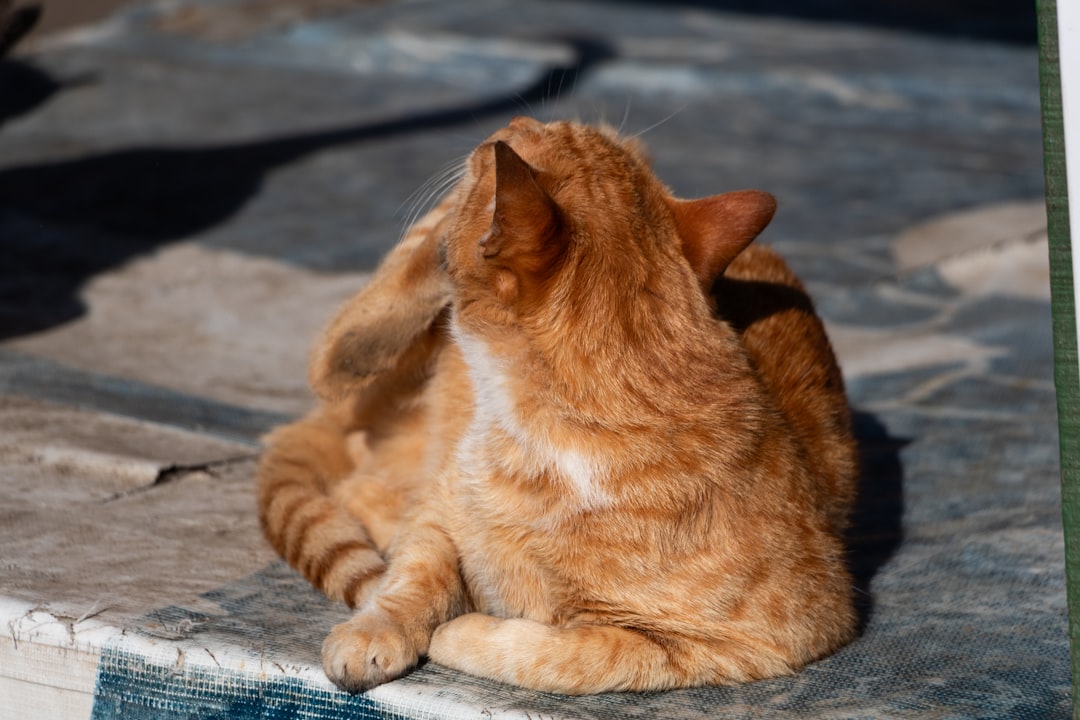
Bring photographs of the affected areas at their worst, and a written history. Skin conditions fluctuate, and the cat may look better on the day.
Managing the itch while you investigate
Cats do not need to stay uncomfortable during a work-up, and controlling the itch also stops self-trauma making the skin worse.
Your vet may prescribe anti-itch medication alongside investigation. Never use human antihistamines or steroid creams without direction — several are unsafe, and steroid creams licked off cause problems.
Trim claws to reduce damage from scratching, and keep the environment dust-free and unscented.
Our guide to trimming cat nails safely covers the technique.
Realistic expectations
Allergic skin disease in cats is usually managed rather than cured, and the goal is a comfortable cat rather than a perfect coat.
Environmental allergy in particular tends to be lifelong, often with seasonal peaks — and in this region, pollen and agricultural dust make spring and harvest predictable flare periods.
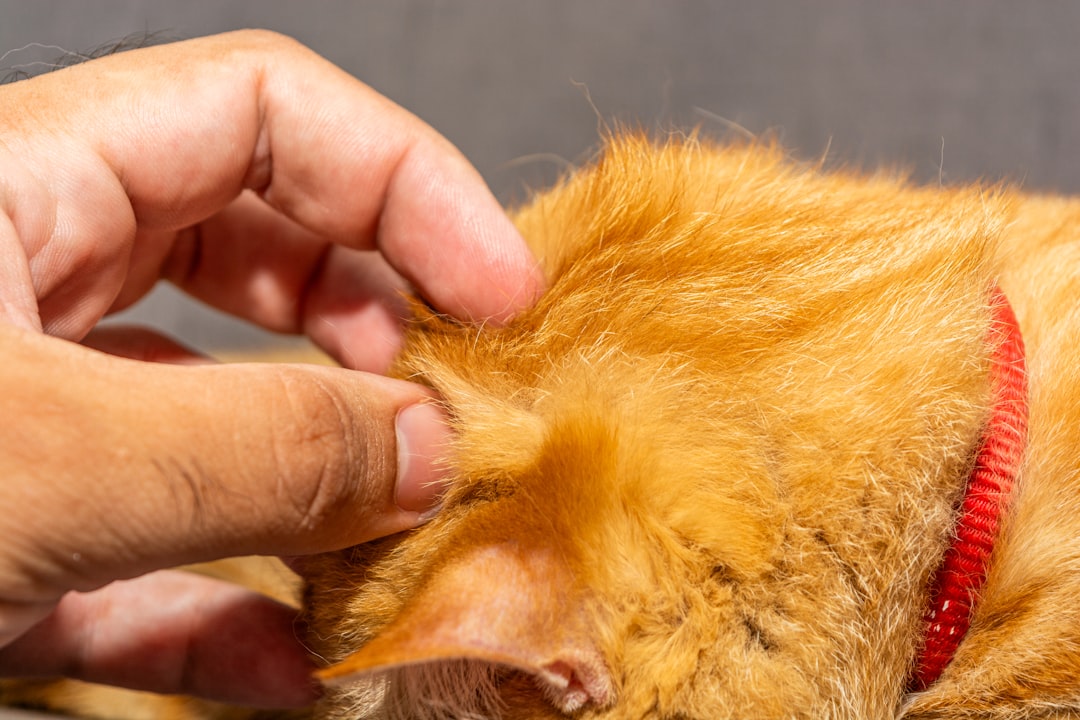
Keep a simple log of flares with dates. Over a year that reveals seasonality far more reliably than memory does, and it guides preventive timing.
Our shedding and grooming guide covers what a normal coat looks like, which is the baseline you are working back toward.
Frequently Asked Questions
Why is my cat losing hair on its belly?
Usually over-grooming rather than hair falling out. Cats groom privately, so owners often see symmetrical hair loss without ever witnessing the behaviour. Fleas and allergy are the commonest causes.
My cat has no fleas — could it still be flea allergy?
Yes. Flea allergy dermatitis means a severe reaction to a small number of bites, and cats groom fleas off before you see them. Rigorous flea control for three months is the standard first step.
How is food allergy in cats diagnosed?
By a strict elimination diet using a novel or hydrolysed protein for eight to twelve weeks with absolutely nothing else, then reintroducing the original food to confirm the reaction returns. There is no reliable blood test.
Is my cat over-grooming because of stress?
Possibly, but it is over-diagnosed. Stress-driven over-grooming should be a conclusion after ruling out medical causes — studies have repeatedly found underlying medical causes in cats presumed to be psychological.
Can I give my cat human antihistamines for itching?
Not without veterinary direction. Several are unsafe for cats, and steroid creams get licked off and cause problems. Your vet can prescribe appropriate anti-itch treatment during investigation.
Will my cat’s allergy ever go away?
Environmental allergy is usually managed rather than cured, often lifelong with seasonal peaks. In this region pollen and agricultural dust make spring and harvest predictable flare periods.