

Evacuation guidance for pets assumes carriers, cooperation and a destination. None of that applies to a colony of unsocialised cats.
Caretakers in fire-prone parts of the Central Valley and foothills face a genuinely hard problem, and honest preparation beats improvisation at the moment an order arrives.
Start from what is realistic
You cannot trap and evacuate an entire colony in the hours before a fire arrives. Trapping takes days of preparation and works best on hungry cats, and frightened cats do not enter traps.
What you can do is prepare in advance, act early on warnings rather than orders, and give the cats the best chance of surviving on their own.
- Community cats have strong survival instincts and frequently do survive.
- They know their territory, including where water and cover are.
- Cats routinely reappear at feeding sites days or weeks after a fire.
- Your safety is not a reasonable trade — emergency services will say the same.
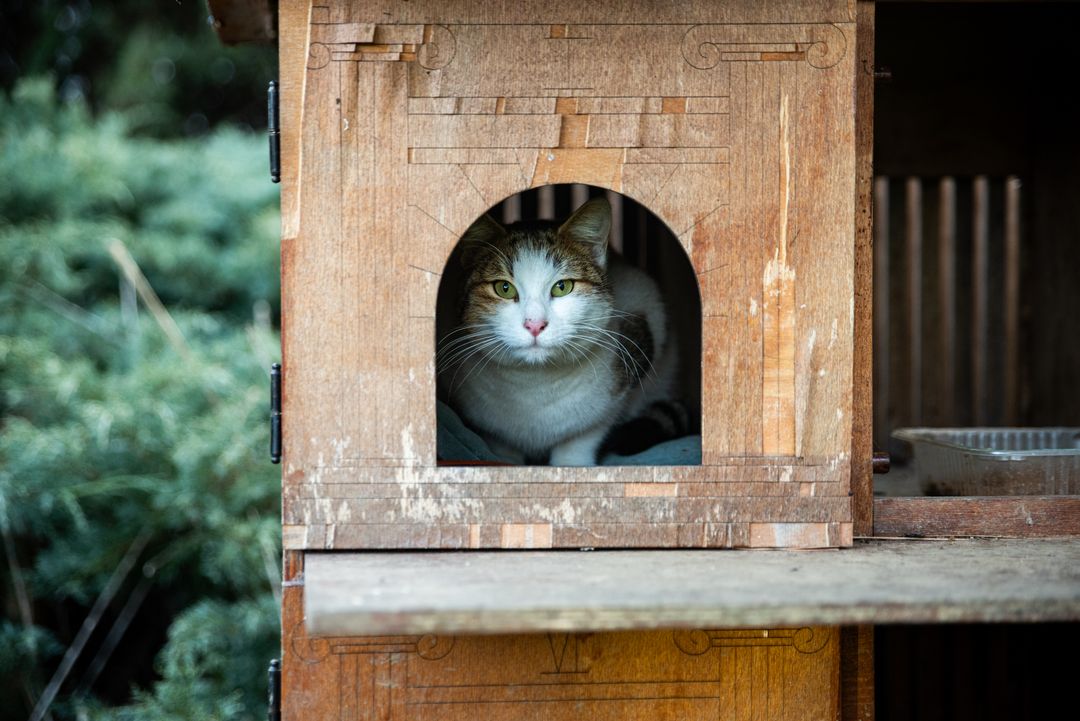
Preparation before any warning
- Ear-tip and record everyone. Identification is what lets cats be matched to a colony afterwards.
- Photograph every cat with clear markings, and keep the images somewhere accessible off-site.
- Microchip any cat that is handleable, registered to you as caretaker.
- Site shelters away from dense vegetation and fuel loads.
- Keep a few traps and carriers accessible, not in a locked shed.
- Tell a second person about the colony, with the location and your records.
That last point matters most. If you are evacuated and cannot return, someone else needs to know the colony exists.
Our guides to colony record keeping and handing over colony care cover the documentation that makes this possible.
When a warning is issued
Act on warnings, not on mandatory orders. The window between them is where anything useful gets done.
| Action | Why |
|---|---|
| Trap and remove socialised cats first | These are the ones that can actually be placed |
| Leave large quantities of water | Water is the limiting factor, not food |
| Leave food in multiple sheltered spots | Spreads the risk if one is destroyed |
| Open sheds and outbuildings if safe | Gives cats options for shelter |
| Remove collars with no breakaway | Snag risk if cats flee through fencing |
| Notify animal control of the colony location | They may include it in re-entry planning |

Prioritising socialised cats is the honest triage. A friendly cat can go to a shelter, foster or boarding facility; a feral one has nowhere to go and will be more distressed by confinement than by taking its chances.
Alley Cat Allies publishes guidance on community cat programmes including emergency situations.
Water above everything
Fire, heat and smoke all dehydrate. Water sources dry up or become contaminated, and it is the resource cats cannot improvise.
Leave far more than seems necessary, in multiple heavy containers that will not blow over, in shaded and sheltered spots. Large plastic tubs work better than bowls.
Our guide to keeping community cats safe through Central Valley summers covers water provision generally, and the same principles apply under smoke conditions.
Smoke, even without fire
The valley gets weeks of smoke from fires burning far away, and colony cats are exposed continuously with no indoor option.
There is limited you can do, but shelter that filters some particulate and reduces exertion helps. Keep water fresh, since ash contaminates open containers quickly.
Watch for coughing, laboured breathing or lethargy in cats you can observe. Any cat you can catch that is breathing with visible effort needs veterinary attention.
Our guide to feline asthma covers respiratory distress signs, which apply equally to smoke exposure.
If you must leave without them
This is the situation caretakers dread and it needs deciding in advance rather than in the moment.
- Leave shelters open and accessible — do not close cats in anywhere.
- Leave the maximum water and food you practically can.
- Do not tie, tether or confine any cat.
- Report the colony location to animal control and any local rescue.
- Leave your contact details with anyone remaining in the area.
- Do not re-enter an area under evacuation order.
Confining cats is the worst possible action. A cat shut in a shed or trap during a fire has no options at all, where a free cat has instincts and local knowledge.
Afterwards
Return as soon as authorities permit, and expect the recovery to take weeks rather than days.
- Re-establish feeding at the usual spot immediately, even if no cats appear.
- Put out water in quantity — sources may be destroyed or contaminated.
- Feed at the same time daily; routine is what draws cats back.
- Use a trail camera if you have one, since cats may return only at night.
- Check outbuildings, culverts and dense cover for cats sheltering or injured.
- Do not assume a missing cat is gone for at least several weeks.
Cats reappear surprisingly often. Consistent feeding at the known site is the single most effective recovery action, more than searching.
Our guide to when a colony cat goes missing covers the search approach in more detail.
Injured cats after a fire
Burns to paws, ears and whiskers are common, as is smoke inhalation. Both may not be obvious at a distance.
A cat moving abnormally, breathing with effort, or unusually approachable may be injured. Trap and get it to a vet rather than observing.

Many veterinary practices and rescues offer reduced or free treatment for wildlife and community cats after a disaster. Ask — it is rarely advertised.
Our guides to what to do with a sick or injured community cat and evacuating with owned cats cover the adjacent situations.

Coordinating with others
Disasters are where isolated caretaking is most exposed, and where connection to a wider network pays off most.
Local rescues, TNR groups and animal control frequently coordinate re-entry access, emergency feeding and injured-animal intake after a fire. A caretaker known to them is included; one nobody knows about is not.
Introduce yourself and register the colony location before fire season rather than during one.
Frequently Asked Questions
Can you evacuate a colony of feral cats?
Not realistically in the hours before a fire. Trapping takes days of preparation and frightened cats do not enter traps. Prioritise socialised cats that can actually be placed somewhere.
What should I leave for colony cats before evacuating?
Water above everything, in large heavy containers in shaded sheltered spots, plus food in multiple locations. Leave shelters open and accessible, and never confine or tether any cat.
Should I shut colony cats in a shed to protect them?
No. Confining cats during a fire removes all their options. A free cat has survival instincts and detailed knowledge of its territory; a confined one has neither.
Do community cats survive wildfires?
Frequently, yes. They know where water and cover are and often reappear at feeding sites days or weeks later. Consistent feeding at the known site is the most effective recovery action.
What preparation helps most before fire season?
Ear-tipping and photographing every cat, keeping records off-site, microchipping any handleable cat, siting shelters away from heavy vegetation, and telling a second person the colony exists.
How long should I keep looking for missing colony cats?
Weeks rather than days. Re-establish feeding at the usual spot immediately, keep to the same daily time, and use a trail camera if you have one, since cats may return only at night at first.