
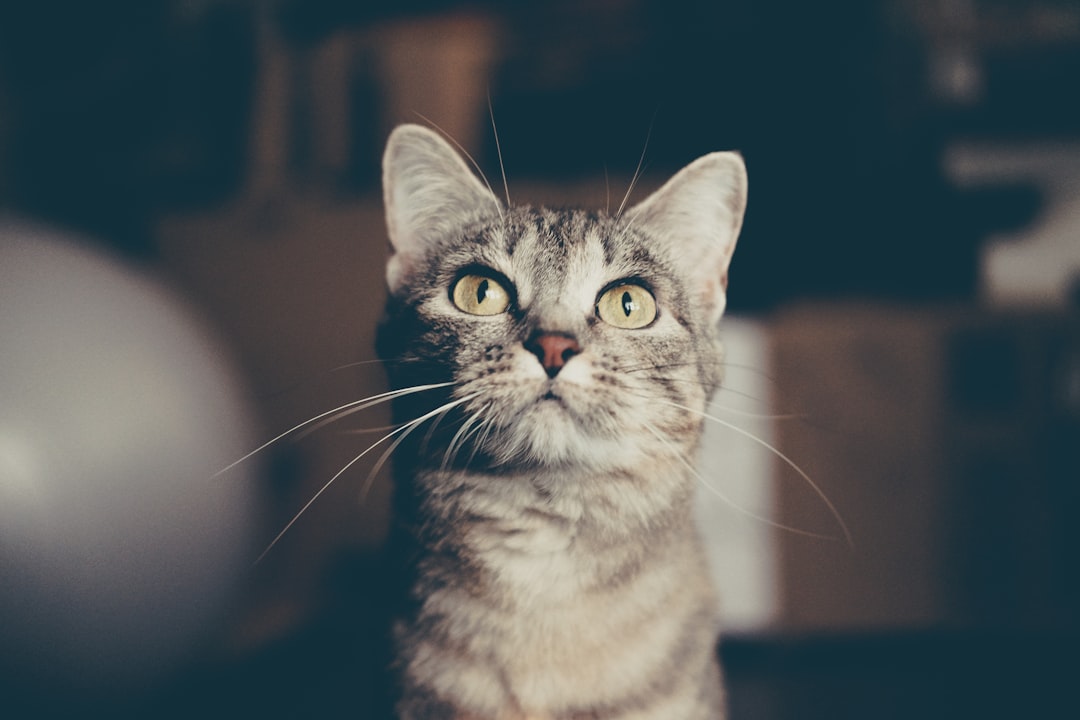
The belief that cats cannot be trained is one of the more durable myths about them, and it is wrong in an interesting way.
Cats train readily. What they do not do is work to please you, which is what people actually mean. They work for outcomes, which makes reward-based training a good fit and punishment entirely useless.
Why punishment does not work on cats
Worth establishing first, because it is the approach most people default to and it reliably makes things worse.
- Cats do not connect a punishment with something they did moments ago.
- They associate the punishment with you, not with the behaviour.
- Fear suppresses behaviour only while you are present.
- It increases anxiety, which drives many of the problems people are trying to fix.
- It damages the relationship, which makes everything else harder.
Spray bottles, shouting and physical correction all fall into this category. A cat that stops jumping on the counter when you are watching has learned about you, not about the counter.
What clicker training actually is
A clicker is a small device that makes a distinct click. It is not magic and it is not the reward — it is a marker.
The click tells the cat precisely which instant earned the treat. That precision is the whole point, because “good boy” two seconds later marks nothing useful.
- The cat does something you want.
- You click at the exact moment it happens.
- You give a treat immediately afterwards.
- The cat learns that the click predicts food, and works out what caused it.
You can use a word instead — a short, consistent “yes” — if a clicker is awkward to hold. The mechanism is the same.
Jackson Galaxy publishes extensive practical material on cat behaviour and training.
Getting started
The setup matters more than technique at the beginning.
| Element | What works |
|---|---|
| Treats | Very small, high value, easily swallowed |
| Timing | Before a meal, when the cat is mildly hungry |
| Session length | Two to five minutes, no longer |
| Frequency | Once or twice daily |
| Location | Quiet, familiar, no other pets |
| Ending | While the cat is still interested |
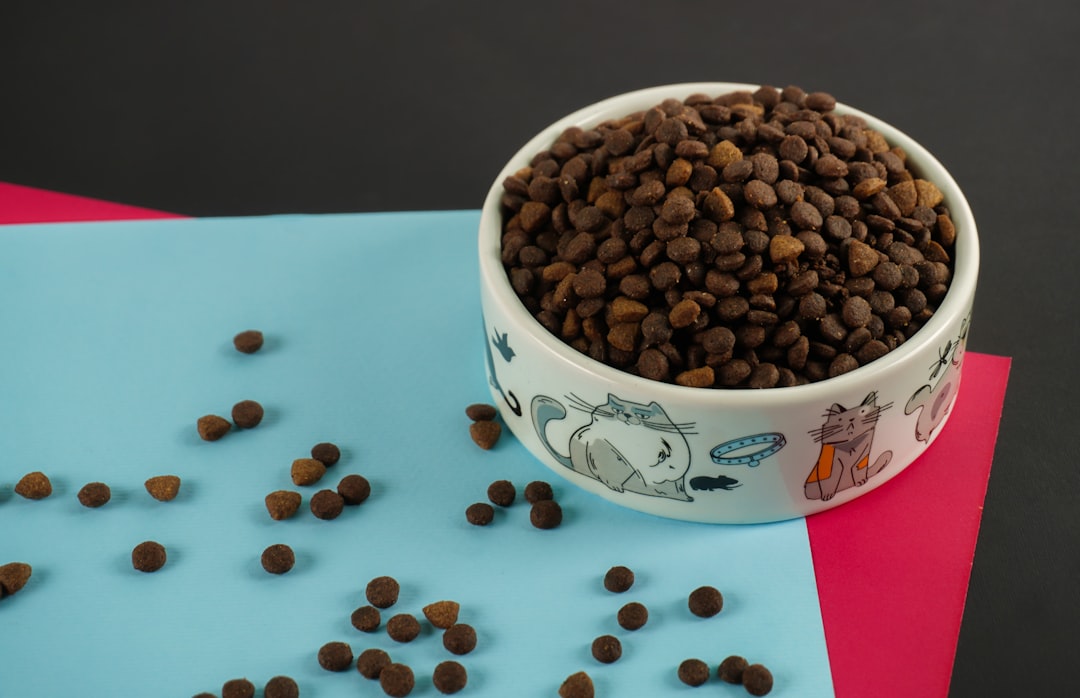
Treat size is the commonest mistake. A cat that has eaten six substantial treats is full and finished; sessions run on tiny fragments.
Charging the clicker
Before teaching anything, the cat needs to learn what the click means.
Click, then immediately give a treat. Repeat ten to fifteen times over a couple of short sessions, asking nothing of the cat.
You will know it has landed when the cat looks toward you expectantly at the sound. That is the association built.
The first behaviour: targeting
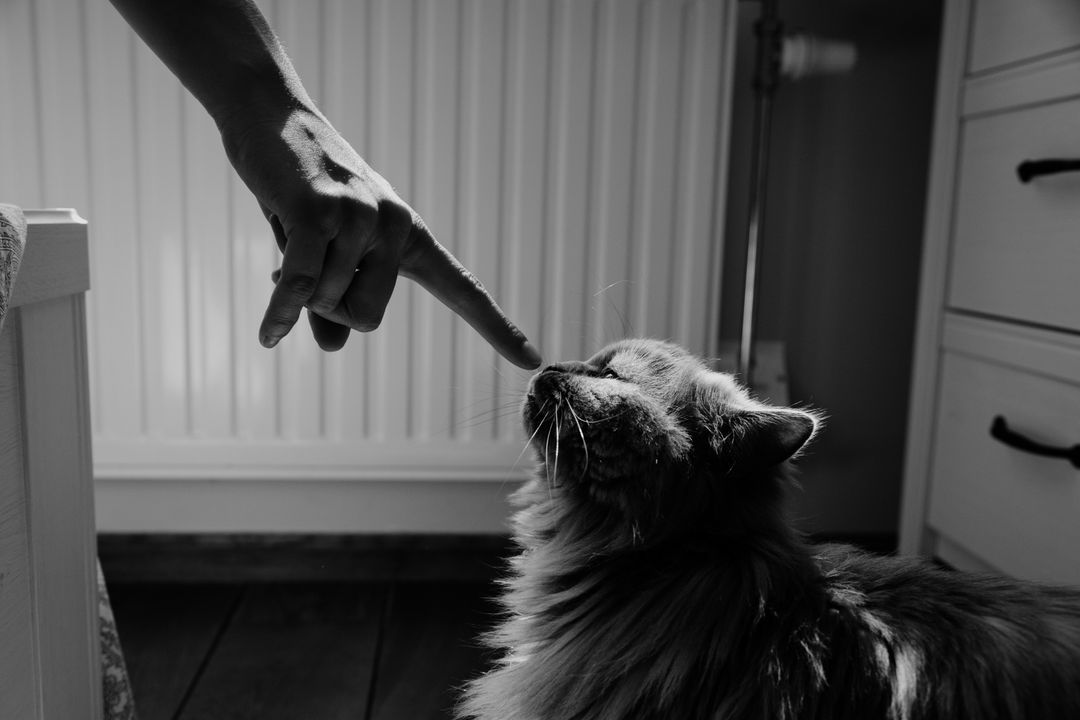
Targeting — the cat touching its nose to a target, usually the end of a stick or your fingertip — is the foundation almost everything else builds on.
- Hold the target a few centimetres from the cat’s nose.
- Most cats investigate it and touch it out of curiosity.
- Click the instant the nose makes contact.
- Treat immediately.
- Repeat, gradually moving the target so the cat steps toward it.
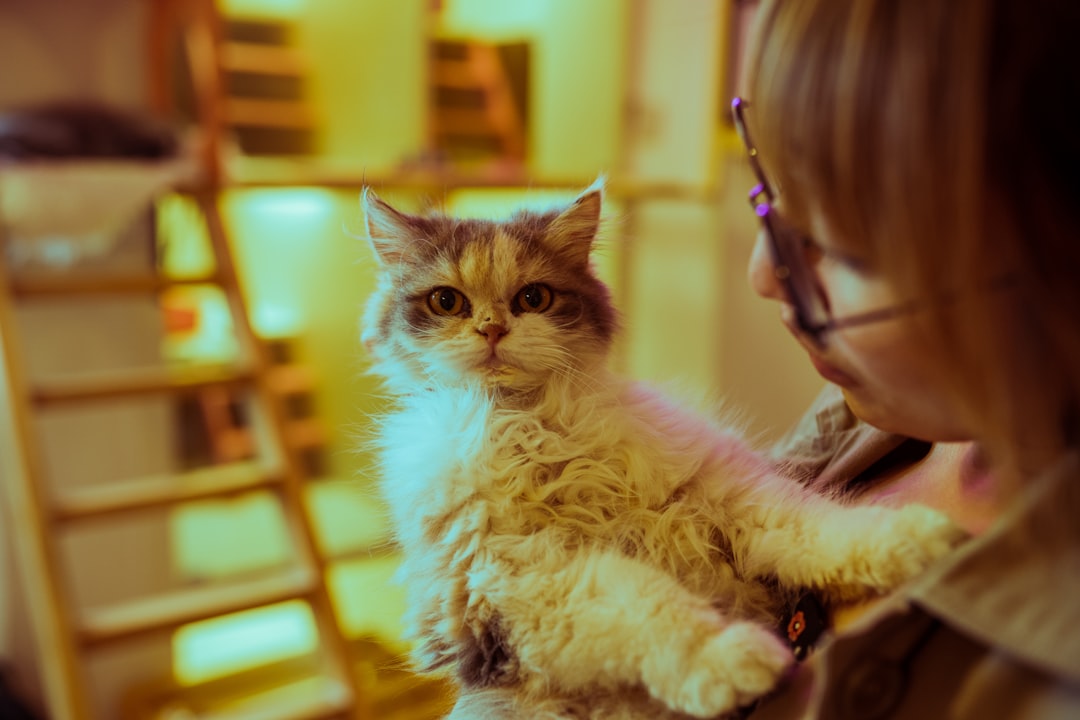
Once a cat targets reliably, you can lead it — onto scales, into a carrier, off a counter, onto a mat — without handling it at all.
The three most useful things to teach
Skip the tricks initially. These three genuinely improve daily life.
- Voluntary carrier entry. Removes the single biggest obstacle to veterinary care.
- Come when called. Genuinely useful in an emergency or evacuation.
- Go to a mat or perch. An alternative to whatever you would rather they were not doing.
Carrier training in particular pays for itself many times over. Our carrier training guide covers it in detail, and evacuation planning covers why recall matters here.
Teaching an alternative instead of forbidding
This is the central idea in cat training and it changes how you approach every problem behaviour.
You cannot usefully teach a cat not to do something. You can teach it to do something else that is incompatible and better rewarded.
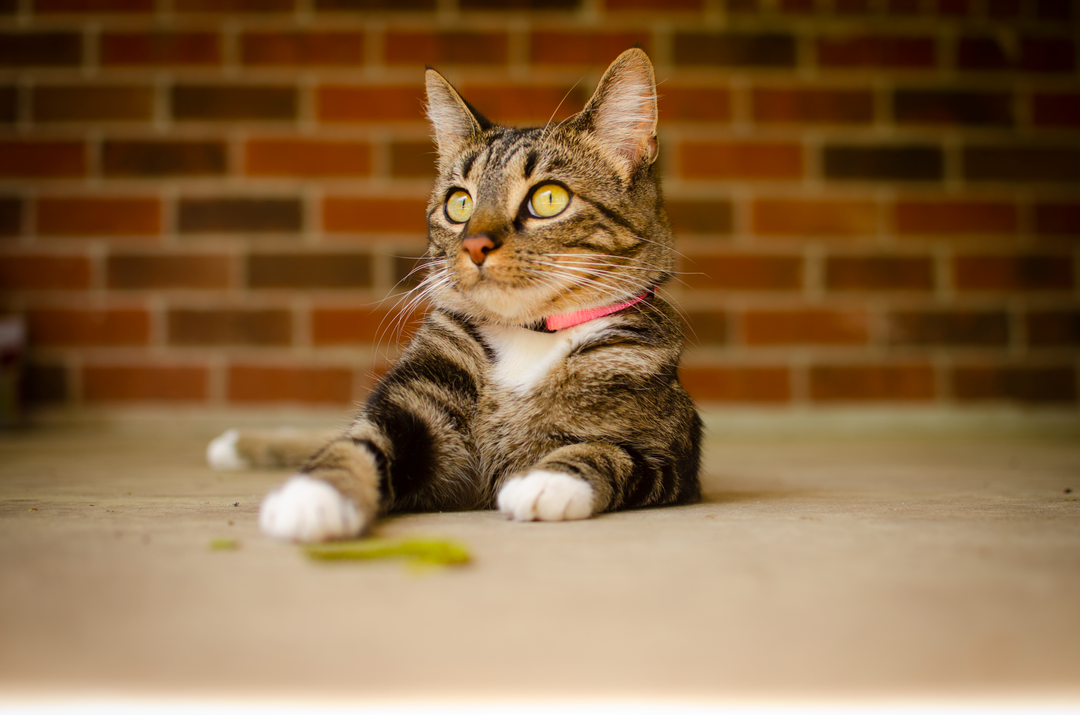
A cat on the counter wants height and vantage. Provide a rewarded perch nearby and reinforce it heavily, and the counter becomes the less attractive option.
Our guide to stopping counter jumping works through that specific case, and redirecting scratching applies the same logic.
Common mistakes
- Sessions that run too long — stop while the cat still wants more.
- Treats that are too large, so the cat fills up.
- Clicking late, which marks the wrong moment.
- Repeating a cue the cat has not yet learned.
- Training a cat that is not remotely hungry.
- Expecting dog-like reliability — cats participate when they choose to.
That last point is worth accepting rather than fighting. A cat that walks away has finished; ending there keeps the next session willing.
Training as enrichment
Beyond the practical behaviours, short training sessions are genuinely good mental exercise for indoor cats.
Problem-solving for food engages a cat in a way that ambient toys do not, and it uses the same hunting and foraging drives.
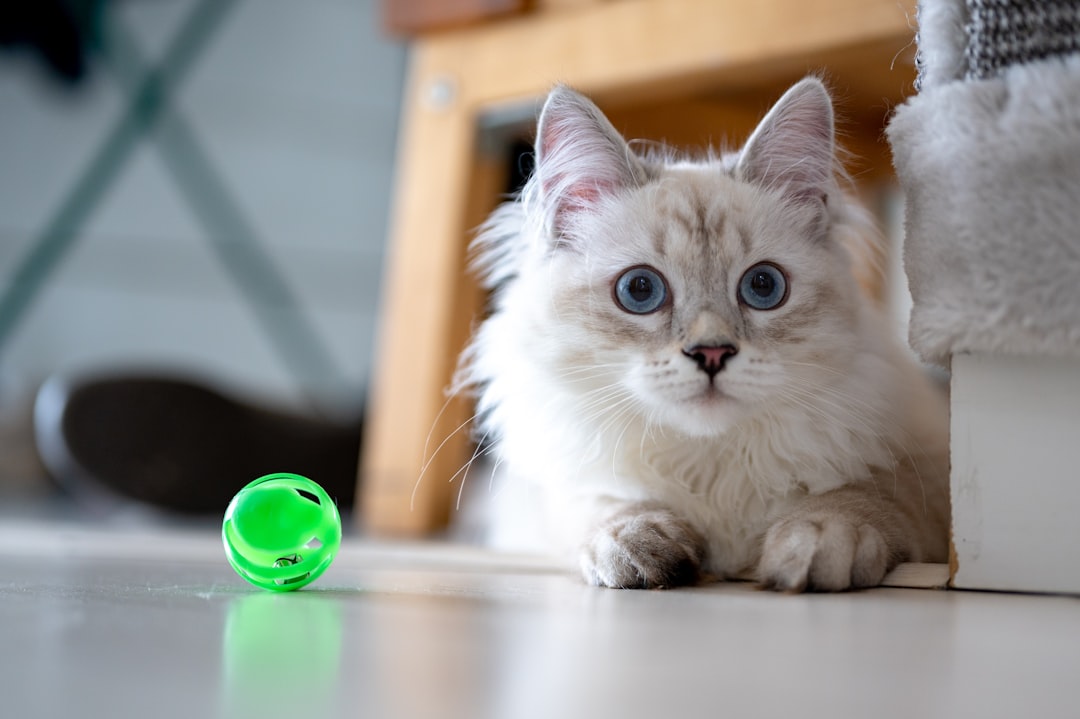
It is also useful for shy cats, because it creates positive interaction at a distance without any handling. Our guides to enrichment and play and helping a shy cat cover both angles.
Using it for vet visits and the carrier
This is where clicker training earns its keep, because it turns the two most stressful events of a cat’s year into something it has practised.
Work in stages, over weeks rather than days, and never move to the next step until the current one is genuinely relaxed.
- Leave the carrier out permanently with the door open and bedding inside.
- Click and treat for any voluntary approach, then for stepping in.
- Click for staying in with the door still open, building duration.
- Close the door for one second, click, open it. Extend slowly.
- Lift the carrier a few inches, click, set it down.
- Take short trips to nowhere, so the car is not only the vet.
The same method builds tolerance for handling — a paw touched, an ear looked in, a mouth lifted — each clicked and rewarded before it becomes an examination.
Our guide to choosing a vet for your cat covers finding a practice that will work with this rather than against it.
Frequently Asked Questions
Can cats actually be trained?
Yes, readily. What cats do not do is work to please you — they work for outcomes, which makes reward-based training effective and punishment useless.
What does the clicker do?
It marks the exact instant the cat did the right thing, so the reward is unambiguous. It is not the reward itself. A short consistent word such as “yes” works the same way.
How long should a cat training session be?
Two to five minutes, once or twice daily, ideally before a meal. Stop while the cat is still interested — a cat that walks away has finished, and ending early keeps the next session willing.
What should I teach first?
Targeting — the cat touching its nose to a stick or fingertip. Once reliable, it lets you lead the cat into a carrier, onto scales or off a surface without handling it at all.
Why does spraying my cat with water not work?
Cats associate the punishment with you rather than the behaviour, so they simply learn to do it when you are absent. It also raises anxiety, which drives many of the problems people are trying to fix.
Can you train a cat not to do something?
Not usefully. Teach an incompatible alternative that is better rewarded instead — a perch near the counter, a scratching post by the sofa — and the unwanted option becomes less attractive.