
A cat that bites is not being vicious and is very rarely being dominant. In almost every case it is doing one of three things: playing, telling you to stop, or reacting to something else entirely.
Working out which one determines the fix, and the fixes are quite different.
The three common types
| Type | When it happens | What it means |
|---|---|---|
| Play aggression | During play, or ambushing ankles | Hunting behaviour with no proper outlet |
| Petting-induced | After a period of being stroked | “Enough now” — overstimulation |
| Redirected | Seemingly unprovoked | Aroused by something else, you are nearest |
| Fear or pain | On handling, or when cornered | Defensive — check for injury or illness |
| Territorial | Around other cats | Conflict between household cats |
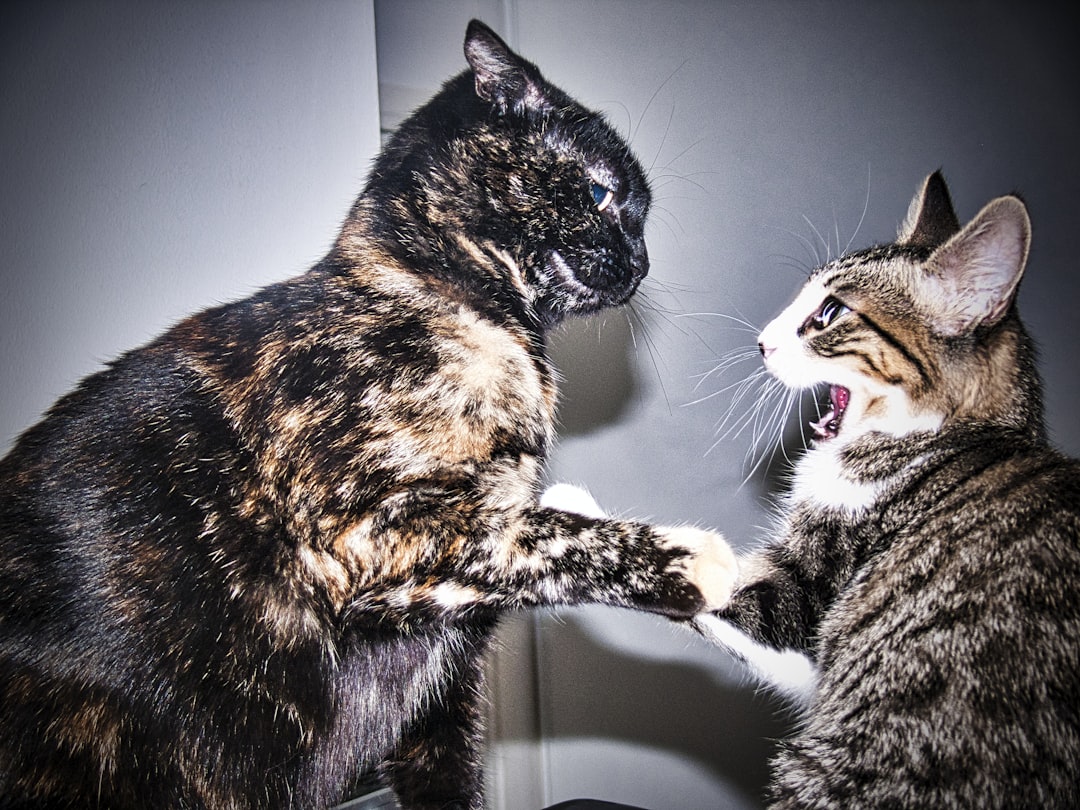
The first two account for the large majority of ordinary household biting. The American Veterinary Medical Association publishes owner guidance covering the full range.
Play aggression
Cats are predators, and hunting behaviour needs an outlet. A cat with no adequate outlet directs it at the nearest moving thing, which is frequently your hands or ankles.
It is most common in young cats, single cats, indoor cats, and cats that were hand-raised or separated from littermates too early.
Kittens learn bite inhibition from siblings, who yelp and stop playing when bitten too hard. A hand-raised singleton never learns that lesson.
- Ambushing feet from behind furniture.
- Grabbing hands with both paws and rabbit-kicking.
- Biting during petting that started as play.
- Pouncing on moving feet under a duvet.
- Escalating rather than settling during play.
Fixing play aggression
The rule that solves most cases: hands are never toys. Not once, not when the cat is small, not because it is cute.
- Never use hands or feet in play, at any age.
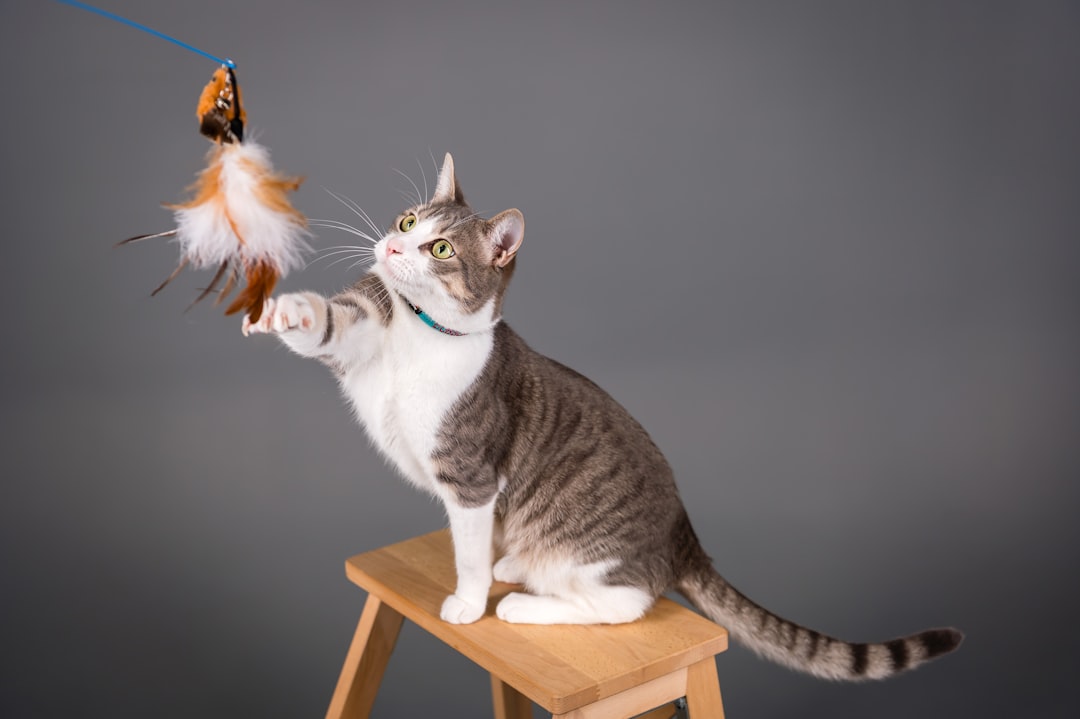
- Use a wand toy so your hands stay well away from the action.
- Play twice daily, properly, so the hunting drive is spent.
- Let the cat catch the toy repeatedly — a hunt that never ends frustrates.
- End sessions with food, which completes the sequence and settles the cat.
- When bitten, stop moving, disengage and leave. Do not pull away sharply.
Pulling away triggers the chase instinct and makes the bite worse. Going still is boring, and boring ends the game.
Our guide to playing with your cat properly covers the hunt sequence in detail, and it is the single most effective intervention here.
Petting-induced aggression
This is the one owners find most baffling. The cat is purring, apparently content, and then suddenly bites the hand stroking it.
It is not unpredictable. The cat almost always gave warnings that were missed, because the person was watching the cat’s face rather than its tail and skin.
| Warning signal | Meaning |
|---|---|
| Tail beginning to flick or thump | Irritation building |
| Skin rippling along the back | Overstimulation |
| Ears rotating back or flattening | Escalating |
| Body tensing, stillness changing | About to act |
| Turning the head toward your hand | Final warning |
| Pupils dilating | Arousal |

Every cat has a tolerance threshold for continuous contact, and it varies enormously. Some enjoy long sessions; others want three strokes and then to sit near you rather than on you.
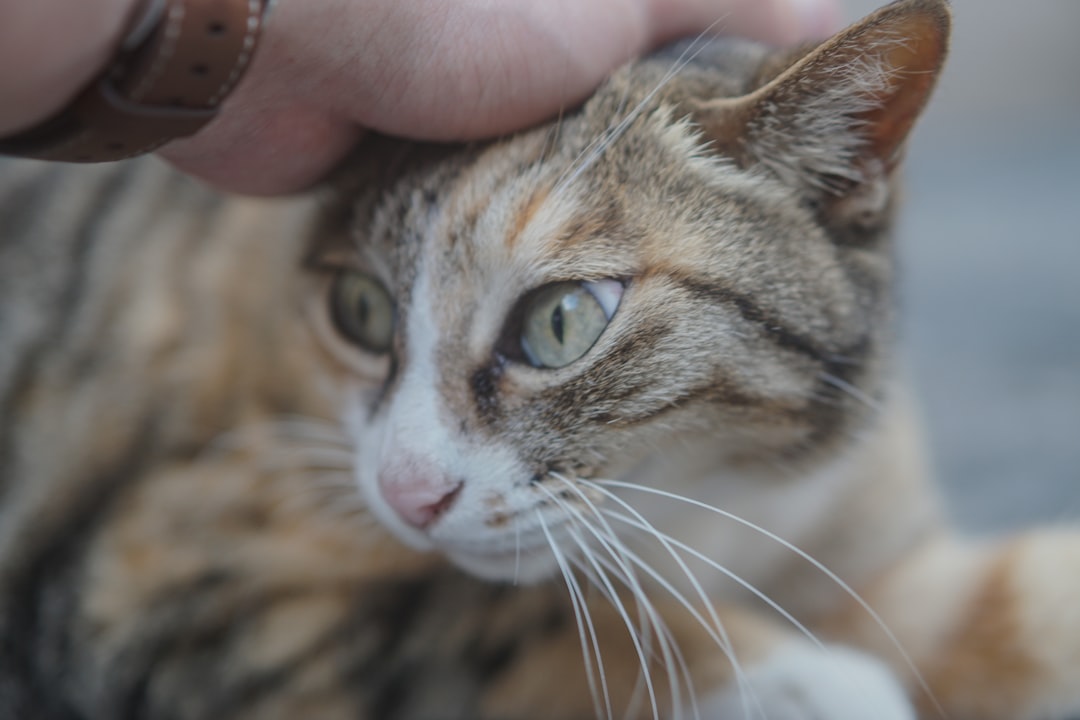
The fix is to stop before the threshold, not at it. Short sessions that end while the cat still wants more build tolerance; long sessions that end in a bite reduce it.
Our guide to reading cat body language covers these signals in detail.
Where to stroke, and where not to
Most cats have clear preferences that track their scent glands.
- Usually welcome: cheeks, chin, base of the ears, top of the head.
- Often tolerated: along the back, avoiding the base of the tail.
- Frequently not: belly, legs, paws, base of the tail.
The belly is the classic trap. A cat rolling over is displaying trust, not requesting a belly rub, and hands that arrive there are frequently grabbed.
Redirected aggression
This looks unprovoked and is genuinely alarming. The cat is aroused by something it cannot reach — usually another cat outside a window — and attacks whatever is nearest.
Do not attempt to comfort a cat in this state. Leave the room, close the door, and give it time to come down, which can take hours.
Prevent it by blocking the trigger: frosted film on low windows, or deterrents to keep visiting cats out of the garden. Our guide to deterring cats humanely covers the options.
When biting means pain
A cat that has never bitten and suddenly starts is a medical question until proven otherwise.
Arthritis, dental pain, ear infection and abdominal pain all cause biting on handling, and the change is usually described as the cat having become grumpy.
Our guide to arthritis in cats covers the most commonly missed cause in older cats, and dental health covers another.
What never works
- Hitting, flicking the nose, or any physical punishment — increases fear and biting.
- Shouting, which raises arousal.
- Spray bottles, which damage your relationship without teaching anything.
- Scruffing an adult cat, which is frightening rather than corrective.
- Rough-housing with hands to “show it who is boss”.
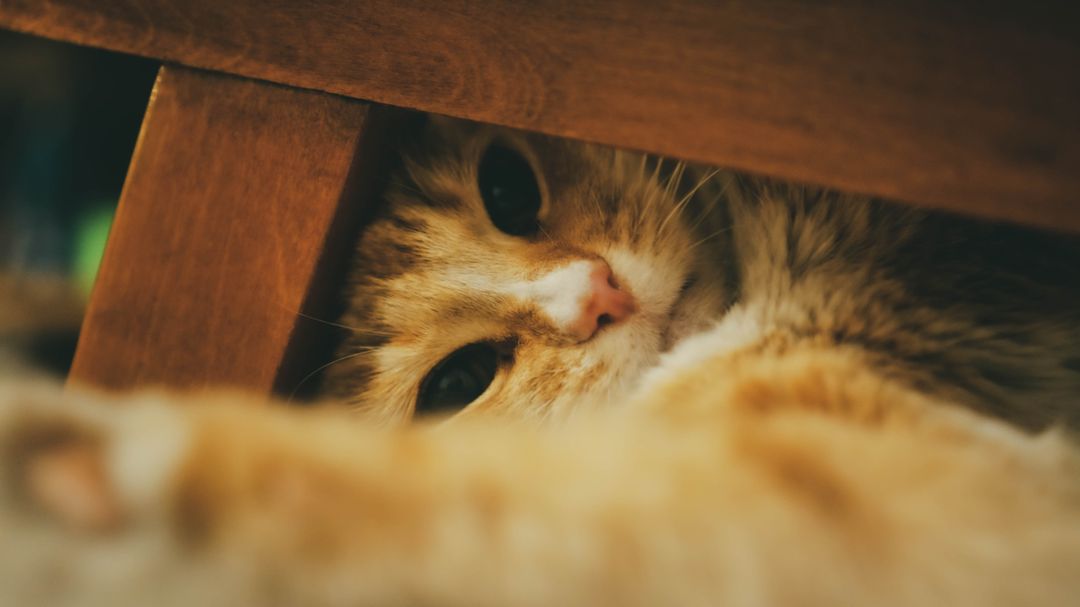
Punishment converts a cat that bites in play into a cat that bites in fear, which is considerably harder to resolve.
If bites are frequent, escalating or breaking skin, involve your vet. Cat bites also carry genuine infection risk for people and any bite that becomes red, swollen or painful needs medical attention.
Kittens and bite inhibition
The window for teaching this is early, and it is far easier than correcting it later.
Kittens learn from littermates who stop playing when bitten too hard. A singleton or early-separated kitten never gets that feedback, and you have to provide it.
When a kitten bites, stop all movement, disengage and end the session for a few minutes. That mirrors what a littermate would do, and it works far better than any correction.
Our guide to socialising a kitten covers the wider handling window.
Frequently Asked Questions
Why does my cat bite me during play?
Because hunting behaviour has no adequate outlet. It is most common in young, single and indoor cats, and in cats hand-raised or separated from littermates before learning bite inhibition.
Why does my cat bite while I am stroking it?
Petting-induced aggression — the cat has reached its tolerance threshold for continuous contact. It almost always gave warnings first: a flicking tail, rippling skin, or ears rotating back.
Should I pull my hand away when a cat bites?
No. Pulling away sharply triggers the chase instinct and worsens the bite. Go still, disengage and leave — being boring is what ends the game.
Why did my cat attack me for no reason?
Usually redirected aggression. The cat was aroused by something it could not reach, often another cat outside a window, and attacked whatever was nearest. Leave the room and give it hours to settle.
Can I play with my cat using my hands?
No, at any age. Hands should never be toys — a kitten taught that hands are prey becomes an adult cat that ambushes them. Use a wand toy so your hands stay out of the action.
My cat suddenly started biting — what changed?
Treat it as medical until proven otherwise. Arthritis, dental pain, ear infections and abdominal pain all cause biting on handling, and the change is usually described as the cat becoming grumpy.