
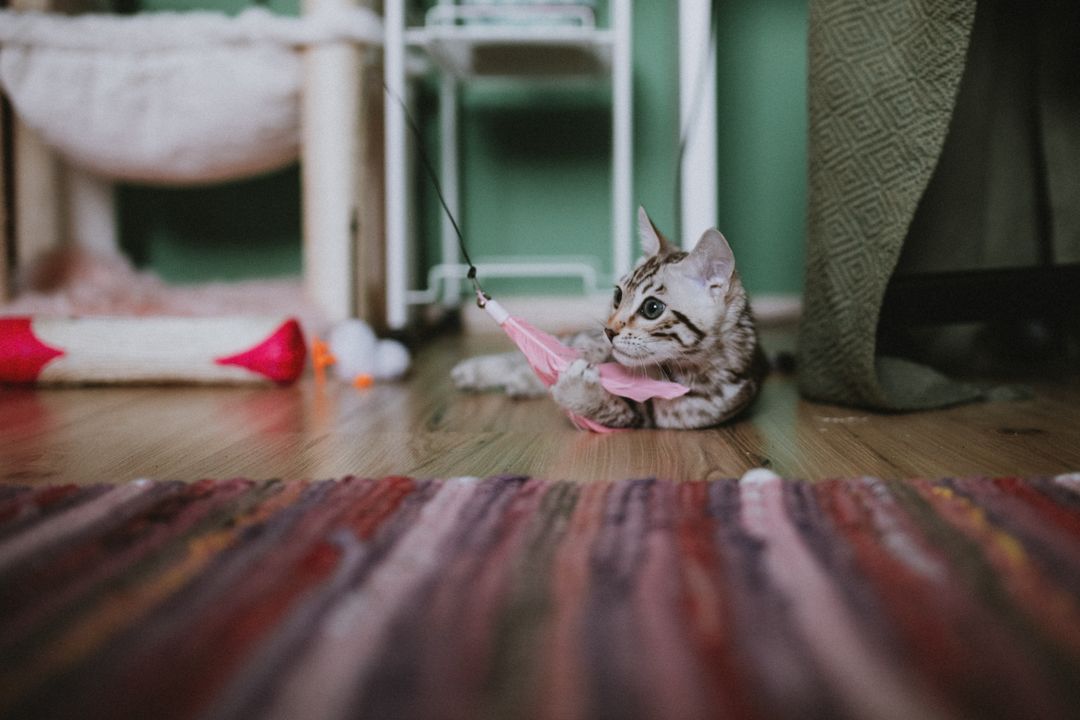
Most people play with their cat by waving a toy about until the cat loses interest, then conclude the cat does not like playing.
What actually happened is that the session never completed the sequence a cat needs. Play is a hunt, and a hunt that never ends in a catch is frustrating rather than satisfying.
The hunt sequence
Cat play follows a fixed predatory pattern, and a satisfying session moves through all of it.
- Stare. The cat locks on to the target.
- Stalk. It moves in low and slow.
- Chase. The pursuit.
- Pounce and catch. Physical contact with the prey.
- Kill bite and manipulate. Grabbing, biting, rabbit-kicking.
- Eat. The sequence completes with food.
Sessions that skip stages four and five — because the toy is always kept out of reach — leave the cat wound up rather than settled.
Ending with a small meal or a treat completes stage six, and it is why cats typically groom and then sleep after a good session.
Why laser pointers frustrate cats
A laser dot can be stalked and chased but never caught. The sequence cannot complete, no matter how long the session runs.
Some cats develop genuine frustration behaviours as a result — obsessive searching for the dot, or redirected excitement onto other pets.
If you use one, always finish by landing the dot on a physical toy or a few treats so the cat catches something real.
What actually works
| Toy type | Why it works | Notes |
|---|---|---|
| Wand toy with feathers or fabric | Moves like prey, you control it | The single best option |
| Small throwable toys | Chase and carry | Mice-sized, lightweight |
| Kicker toys | Allows the rabbit-kick stage | Often catnip-filled |
| Puzzle feeders | Foraging effort at mealtimes | Dry food only |
| Crinkly tunnels and bags | Ambush play | Cheap and effective |
| Cardboard boxes | Hiding and ambush | Free, endlessly popular |
| Laser pointer | Chase only | Must end on a real object |
The wand toy is worth learning to use properly. Move it like prey — away from the cat, in short darts, disappearing behind furniture — rather than dangling it in the cat’s face.
Prey never runs toward a predator. A toy moving toward a cat triggers defence rather than hunting.
How long and how often
Cats hunt in short bursts, not sustained sessions. Ten to fifteen minutes of genuine engagement beats an hour of half-hearted waving.
Two sessions daily suits most cats, ideally one in the evening when activity naturally peaks. Kittens and young adults need more; senior cats need shorter, gentler sessions but still need them.
- Stop while the cat is still interested rather than waiting for it to walk away.
- Rotate toys weekly — novelty matters more than quantity.
- Put wand toys away between sessions, both for safety and to preserve novelty.
- Let the cat catch the toy repeatedly, not just once at the end.
- Follow with food to complete the sequence.
Enrichment beyond toys
Play is one part of a wider need. Indoor cats in particular need an environment that offers something to do when you are not there.
The Ohio State University Indoor Pet Initiative publishes evidence-based guidance on enriching indoor cat environments.
- Vertical space. Shelves and trees multiply usable territory in a small home.
- Window perches. Genuine enrichment, not a consolation prize.
- Hiding places. Boxes and covered beds reduce baseline stress.
- Scratching surfaces. Both vertical and horizontal.
- Foraging. Puzzle feeders and scattered dry portions.
- Scent variety. Catnip, silvervine, and rotating novel objects.
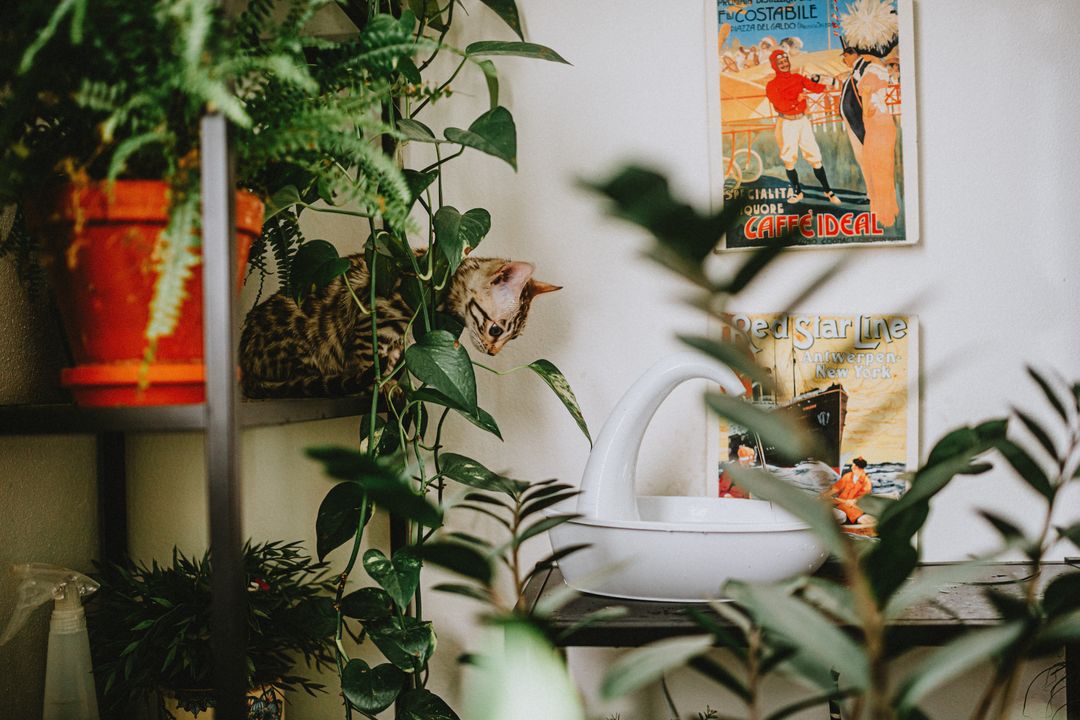
Our guide to stopping a cat scratching furniture covers the scratching provision, and indoor versus outdoor cats covers why enrichment matters more for indoor-only cats.
Play and behaviour problems
A large share of complaints about cat behaviour are boredom in a different form.
| Behaviour | Often solved by |
|---|---|
| 4am zoomies and night activity | A play session plus meal before bed |
| Attacking ankles | Redirecting to wand play twice daily |
| Over-grooming | Enrichment, once medical causes are excluded |
| Destructive chewing | Foraging toys and rotation |
| Attention-seeking vocalising | Scheduled play at predictable times |
| Tension between resident cats | Separate sessions with each cat |
The pre-bed session is the highest-value single change for most households. A cat that has hunted, caught and eaten in the evening sleeps rather than patrolling at 4am.
Playing with a shy or newly adopted cat
Play is one of the fastest routes to building confidence with a nervous cat, because it lets interaction happen at a distance.
Use a long wand toy so you are not looming over the cat, sit on the floor, and let the cat approach the toy rather than you. Many cats will play from under a bed before they will accept being touched.
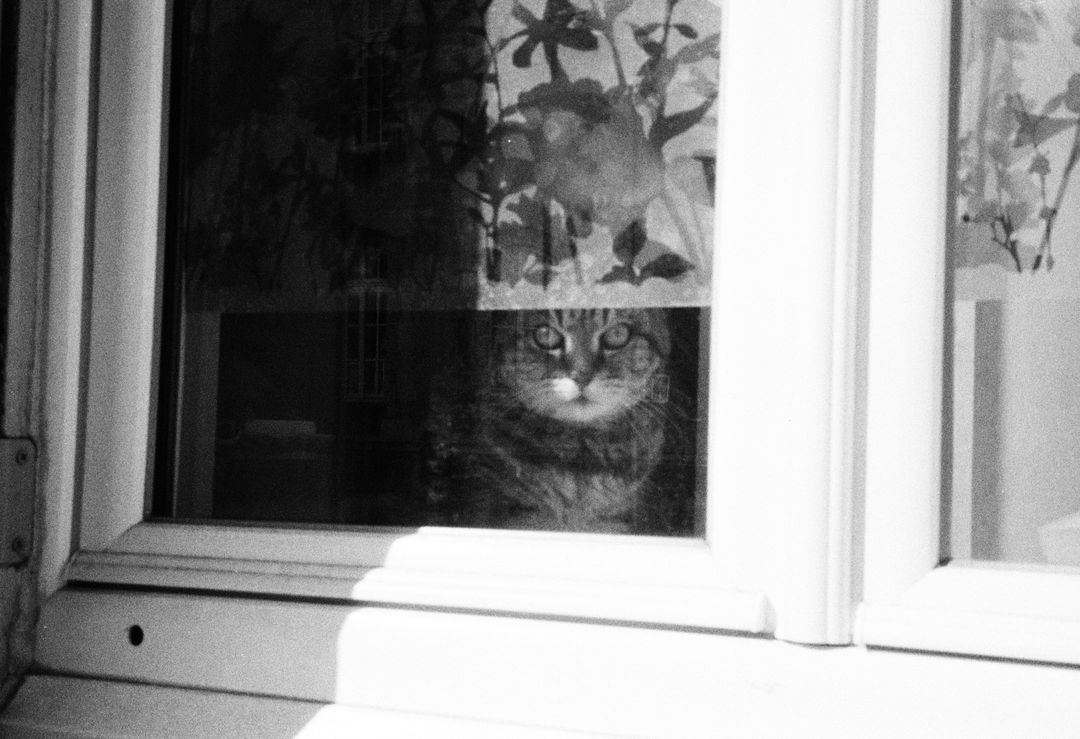
Our guides to helping a shy shelter cat settle in and the first 30 days with a new cat cover the wider settling-in process.
Playing with more than one cat
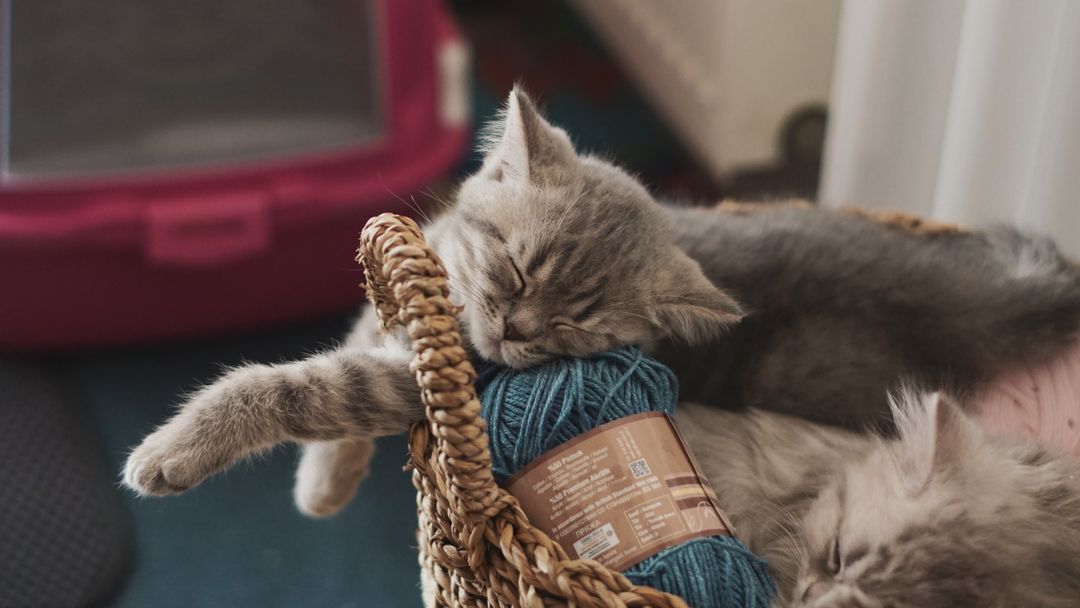
Multi-cat households need a different approach, because a single wand toy usually means one confident cat gets everything.
- Play with each cat separately where possible — short individual sessions beat one group free-for-all.
- Use two toys if playing together, one in each hand.
- Watch for a cat that hangs back; it is being outcompeted, not uninterested.
- Feed immediately afterwards in separate locations.
- Never let play tip into chasing between cats — end the session first.
A quiet cat that never joins in is usually the one that most needs a separate session. Our guide to multi-cat households covers resource competition more broadly.
Safety
A few toys cause genuine emergencies, and they are the ones most likely to be lying around.
String, tinsel, hair ties and ribbon cause intestinal obstruction if swallowed, and a linear foreign body is major surgery. Never leave them accessible unsupervised.
Put wand toys away between sessions for the same reason, and check toys regularly for loose parts. Our checklist for cat-proofing your home covers the wider hazard audit.
The evening session solves one of the most common household complaints. Our guide to why cats meow at night covers when it is unspent energy and when it is medical.
Frequently Asked Questions
How long should I play with my cat?
Ten to fifteen minutes of genuine engagement, twice daily, suits most cats. Cats hunt in short bursts rather than sustained sessions, so quality of engagement matters more than duration.
Are laser pointers bad for cats?
They frustrate cats because the dot can never be caught, so the hunt sequence cannot complete. If you use one, always finish by landing it on a physical toy or treats the cat can actually catch.
What is the best cat toy?
A wand toy with feathers or fabric, used properly — moved away from the cat in short darts and disappearing behind furniture. Prey never runs toward a predator, so avoid dangling it in the cat’s face.
Why does my cat go wild at 4am?
Usually unspent energy. A proper play session followed immediately by a meal in the evening completes the hunt-and-eat sequence, after which most cats groom and sleep rather than patrol.
How do I play with a shy cat?
Use a long wand toy so you are not looming, sit on the floor, and let the cat approach the toy rather than you. Many nervous cats will play from under furniture long before accepting touch.
What enrichment do indoor cats need?
Vertical space, window perches, hiding places, both vertical and horizontal scratching surfaces, foraging opportunities such as puzzle feeders, and rotating novel scents and objects.